
If you’ve ever tried to find a parking space at the MCG on grand final day, you know exactly what it feels like to enter a fight you probably can’t win. You circle the block, your stress levels rise, and you watch as others snag the spots you were eyeing off. In the end, you usually settle for a park three suburbs away and walk the rest of the way.
Digital marketing for a small business can feel remarkably similar. You enter a digital landscape where massive corporations with bottomless pockets are already occupying the prime real estate. They’ve got the top spots on Google, they dominate the social media feeds, and they seem to be everywhere at once.
If you try to fight them on their terms, you’ll lose. You can’t outspend a global franchise on generic keywords, and you can’t out-shout a national brand on broad social media awareness. But here’s the good news: You don’t have to.
Success for a small to medium sized business doesn’t come from winning every battle. It comes from picking the right fight in the first place. It’s about finding the corners of the market where your specific strengths give you an advantage. It’s about being the local hero instead of the global background noise.
Know Your Weight Class
In boxing, they’ve got weight classes for a reason. They don’t put a featherweight in the ring with a heavyweight because the outcome’s a foregone conclusion. In digital marketing, your budget and your reach determine your weight class.
If you’re a local accountant in Footscray, your fight isn’t with the big four banks. If you try to bid on a broad search term like “tax returns,” you’re stepping into a ring with giants who spend millions of dollars a month on that single phrase. Your cost per click will be astronomical, and your budget will vanish before you’ve even finished your morning coffee.
Instead, your fight’s for “tax returns for small businesses in Footscray.” This is a battle you can win. The giants often ignore these specific, local niches because they’re too small for them to bother with. For you, however, that niche is your bread and butter.
Picking the right fight means looking at your budget and asking where it can actually exert some force. It’s better to be the absolute ruler of a small, specific territory than a tiny, unnoticed speck in a massive one.
Industry Context: Where Does the Battle Happen?
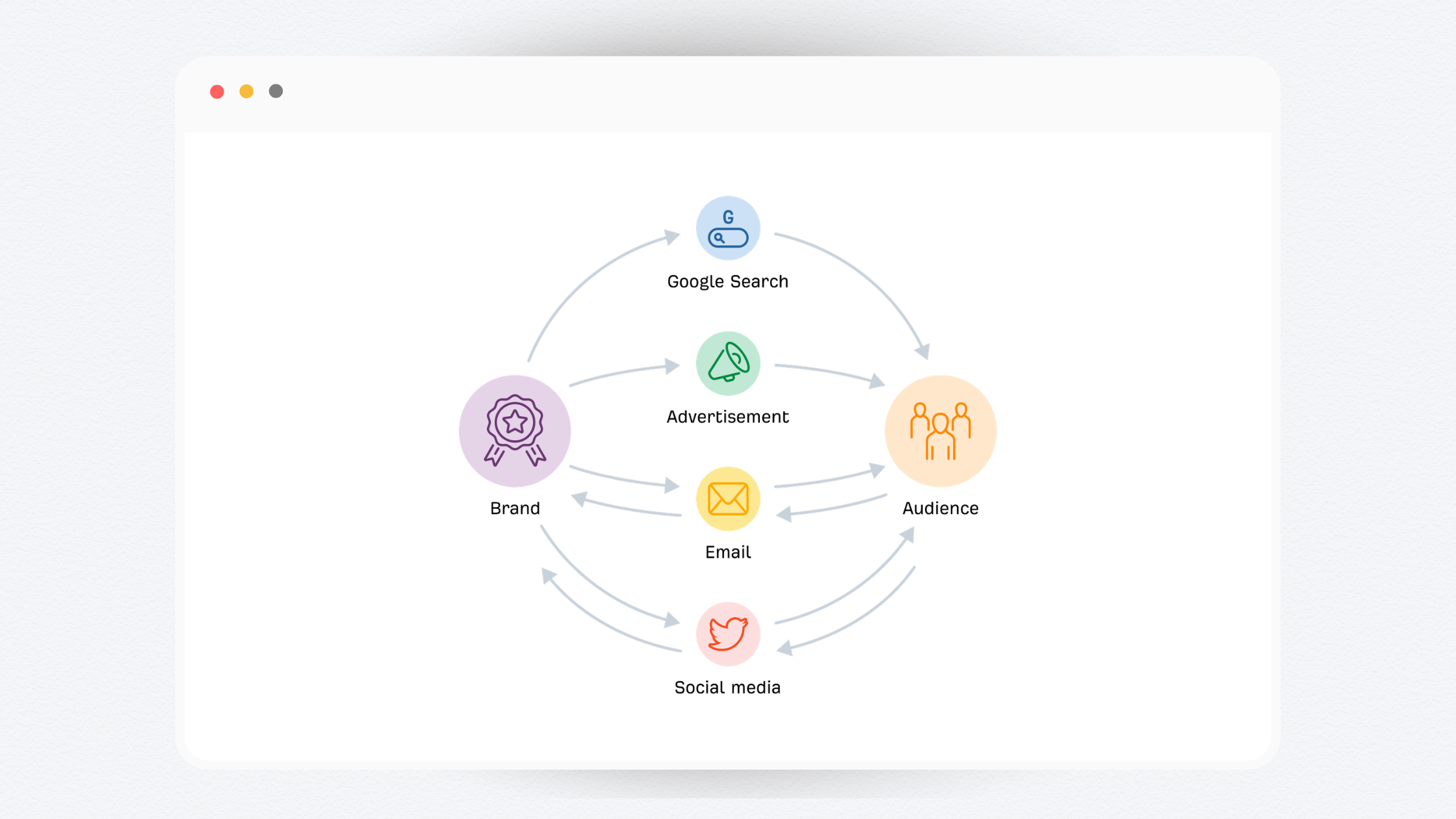
Every industry’s got its own natural battlefield. Before you spend a cent, you need to figure out where your customers go when they’ve got a problem.
If you’re in a service industry where people need a solution right now, your fight’s almost certainly on Google. Think about plumbers, locksmiths, or even lawyers. When someone’s house is flooding at 2 am, they aren’t scrolling through Instagram looking for aesthetic photos of pipes. They’re typing “emergency plumber” into a search bar. That’s where your ads will pop up.
Conversely, if you sell something visual or emotion-based, like boutique flowers, skincare, clothing, or furniture, your fight happens on social media. People need to see your work to want it. They need to imagine your product in their lives. In this case, spending your entire budget on Google Search keywords might be a waste.
Understanding your industry’s natural habitat allows you to stop wasting energy on platforms that don’t suit your business model. You don’t need to be everywhere; you just need to be where the decision’s made.
The Budget is Your Stamina
Small business owners often feel like their limited budget’s a weakness. In reality, it can be a strength because it forces you to be disciplined. When you’ve got a massive budget, you can afford to be sloppy. When you’ve got a small one, every action has got to count.
Think of your marketing budget as your physical stamina in a late-round title fight. If you’re already feeling the pinch and you’ve only got enough energy for a few more moves, you don’t waste it by swinging wildly at the air and hoping for a lucky break. You’d just exhaust yourself while your opponent watches on. Instead, you keep your guard up and wait for a clear opening. You save that energy for the specific hits, like dominating one specific suburb or one specific product line, so they’ll land and make a real difference to the scorecard.
When you win that small territory, you’ll start to see a return on your investment. You can then take that profit and use it to move forward, expanding your reach to nearby areas or additional product lines.
Assessing the Local Competition
Before you charge into a new marketing channel, take a look at who’s already there. If you want to start a blog about “legal tips for Melburnians,” but three major law firms already have hundreds of high-quality articles on that topic, you’re picking a very hard fight. You’ll have to work twice as hard just to get noticed.
However, if you look at those competitors and realise they’re all very formal, dry, and a bit boring, you’ve found a gap. Your fight isn’t about having more content; it’s about having more relatable content. You can win by being the human voice in a room full of robots.
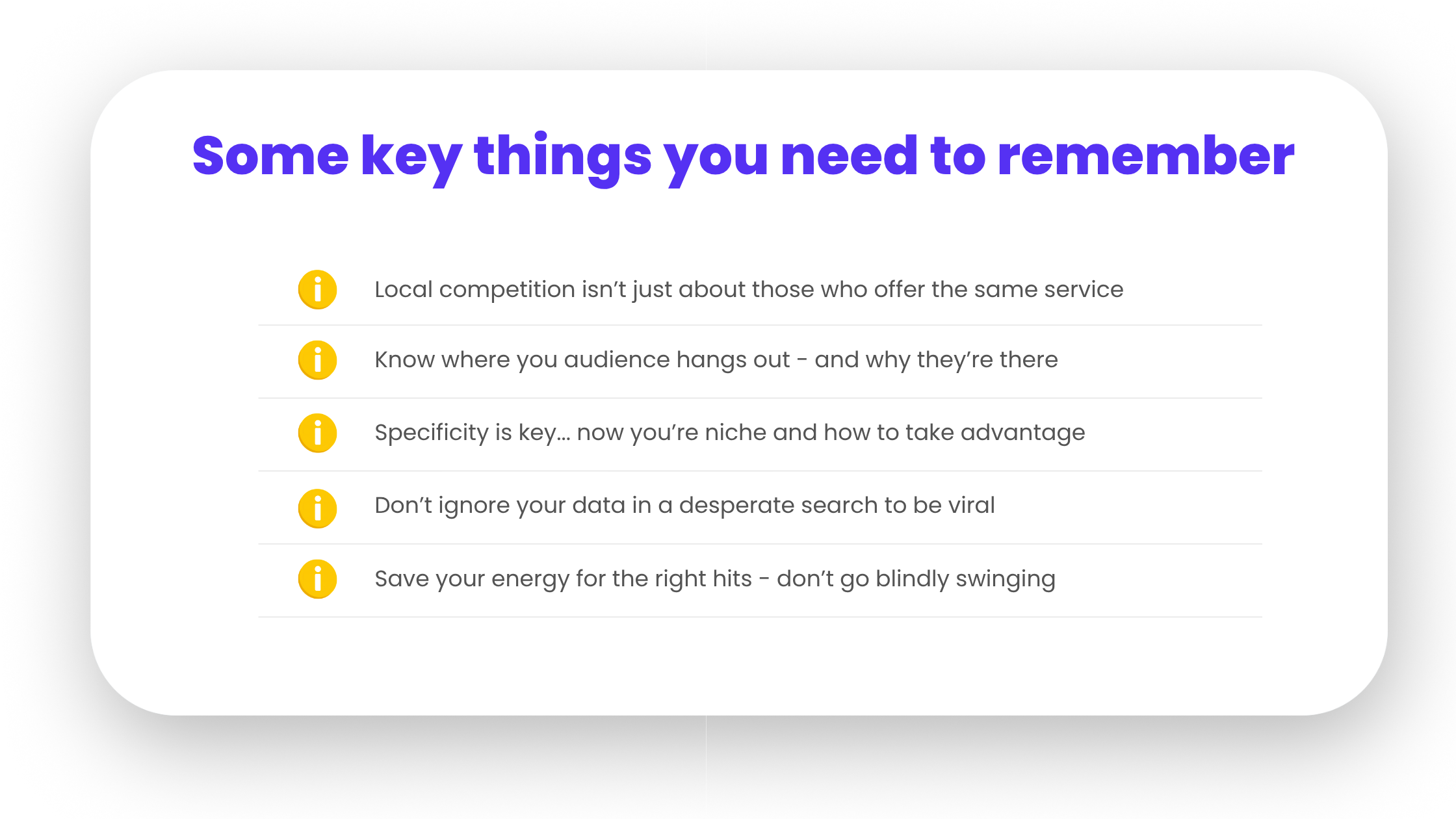
Local competition isn’t just about who offers the same service. It’s about who’s competing for the same digital attention. Sometimes the best way to win a fight’s to go where the competition’s lazy. If your competitors have terrible websites that don’t work on mobile phones, your fight should be web development. By having a site that actually works, you win by default because the customer experience’s so much better.
The Niche Advantage
Imagine you run a fitness business. If you try to fight the general “gym Melbourne” battle, you’re up against global chains with huge marketing budgets. You’ll be outmuscled before you even start. Instead, pick a fight you can dominate: “post-natal yoga specialist in Yarraville.” You’ve shifted from being a generic option to the absolute best choice for a specific group of people in your neighbourhood. You aren’t fighting the giants; you’re leading your own local community.
By narrowing your focus, you do three things:
- You lower your competition because most people are too scared to be that specific.
- You lower your costs because the search terms are less expensive.
- You increase your conversion rate because when a poodle owner in Essendon finds you, they feel like you were made specifically for them.
Picking the right fight often means narrowing your sights until you’re the obvious choice for a specific group of people. Once you’ve won their loyalty, you can always expand your borders later.
When to Retreat
One of the first things I was taught when I started doing krav maga is that your first priority is to get away and avoid the fight. It sounds weird, but they’re right!
Part of picking the right fight’s knowing when not to fight at all or quickly leaving the one that you’re not winning. We see many business owners pour money into a channel because everyone else’s doing it, even when it isn’t bringing in a single lead.
If you’ve spent six months trying to win on a specific platform and the results aren’t there, it’s not a sign that you need to spend more. It’s a sign that you’re in the wrong place. There’s no shame in a strategic retreat. Taking your remaining budget and moving it to a channel where you actually have a chance of winning’s the smartest move you can make.
Don’t let ego dictate your marketing strategy. If the data says you’re losing, change the battlefield.
Step Into a Ring Where You’ll Win
We know there’s a lot of pressure to act fast. Many agencies will tell you that you need to jump on every new trend before you miss out. This speed-first approach’s how small businesses end up in fights they aren’t prepared for.
A strategic approach involves sitting down and looking at the landscape first. It means asking: Who’s my customer? Where are they? Who else’s trying to talk to them? How can I say something better or different?
At Digital Freak, we spend a lot of time on this part of the process. We don’t want you to just do marketing. We want you to win. That means we often tell people to stop doing things that feel like they should work but actually don’t. We help you find the path of least resistance so that your budget delivers sales and leads instead of just disappearing into the void.
We’re a small business too, and we’ve had to pick our own fights over the years. We know what it’s like to look at the big agencies and wonder how to compete. We won by being more relatable, more practical, and more focused on our clients’ actual results than on annoying jargon.
We can help you do the same. We’ll help you audit your industry, check out your competition, and look at your budget with a realistic eye. We won’t mess you about with promises of global domination. We’ll just help you win the fights that actually put money in your pocket. Book a free strategy call with Karyn today, and let’s figure out which fight’s the right one for you.

FAQs
My digital marketing budget is small; can I still win against big competitors?
You absolutely can, but you’ve got to be precise. Think of your budget as your energy – you don’t want to waste it all at once. By focusing on a specific suburb or a very niche service, you can dominate that small space. Digital Freak specialises in making small budgets feel massive through smart targeting. Reach out to Karyn for a strategy session.
How do I find the marketing gap my competitors have missed?
Look at their weaknesses. Are their websites clunky? Is their tone dry and boring? Do they ignore local suburbs? That’s your opening. By being more relatable and having a site that works incredibly well, you win by default. Digital Freak can audit your competition to find these gaps. Ask us how during a free strategy call.
Is it a mistake to ignore the big, popular keywords entirely?
For most small businesses, chasing broad terms like “accountant” or “plumber” is just an expensive way to get lost in the crowd. Those words cost a fortune and often attract people who aren’t really your target. You’re better off owning a specific niche where you can be the clear choice for your local areas. Chat to our director and see how our Melbourne agency can help!
How does my location affect my digital marketing budget?
If you’re in a busy Melbourne hub with lots of similar businesses, the cost of entry for ads can be higher. This is why local SEO and being strategic about where you show up matters. Sometimes focusing on a neighbouring suburb where there’s less noise can get you better results for less spend. Digital Freak can help with a free strategy call.

When clients work with me, they get exactly what they want - no-nonsense, authentic digital marketing that works! With my industry experience, eye for detail, and a team that goes the extra mile, every client gets the personalised, expert treatment they deserve. Let’s get you online – and growing!