
$12. That’s roughly what a click costs in a lot of Australian service industries, and considerably more if you’re in law, trades, or anything involving the word “emergency”.
So when someone rings up, chats for 90 seconds, then reveals they’re “just gathering ideas for next year” or they thought you were a different company entirely, you haven’t just lost a bit of time. You’ve bought that conversation. At retail price. And you’ll buy another one this afternoon.
Most business owners treat this as the cost of doing business online. It isn’t. It’s the cost of running ads that haven’t been told who to avoid.
Google ads and Meta ad platforms are extremely good at finding you volume. They’re only good at finding you quality if you explicitly instruct them, and that instruction happens through negative keywords, exclusion audiences and ad copy that deliberately puts the wrong people off.
Let’s walk through all three.
First, let’s define the problem properly
“Bad leads” isn’t one thing. It’s at least four things, and they each need a different fix.
- The wrong-service lead. They wanted something adjacent to what you offer. You’re a commercial electrician; they want a ceiling fan installed in their bedroom.
- The wrong-location lead. Your ads are reaching people who live nowhere near you, or outside your service radius.
- The wrong-budget lead. They want your service, they’re in your area, and they’re expecting to pay about a fifth of what it costs.
- The wrong-intent lead. They’re researching, comparing, writing an assignment, or three years away from actually doing anything.
Lumping these together and blaming “rubbish leads” won’t get you anywhere. Once you separate them out, each one has a fairly mechanical solution.
Negative keywords: the most neglected job in Google Ads
If you’re running search ads and you’ve never looked at a search terms report, stop reading this and go and look at one now. Seriously. Come back in 10 minutes.
What you’ll find is a list of the actual phrases people typed before clicking your ad. It’ll be full of surprises. Some funny, some genuinely upsetting once you multiply them by your cost per click.
Common offenders include:
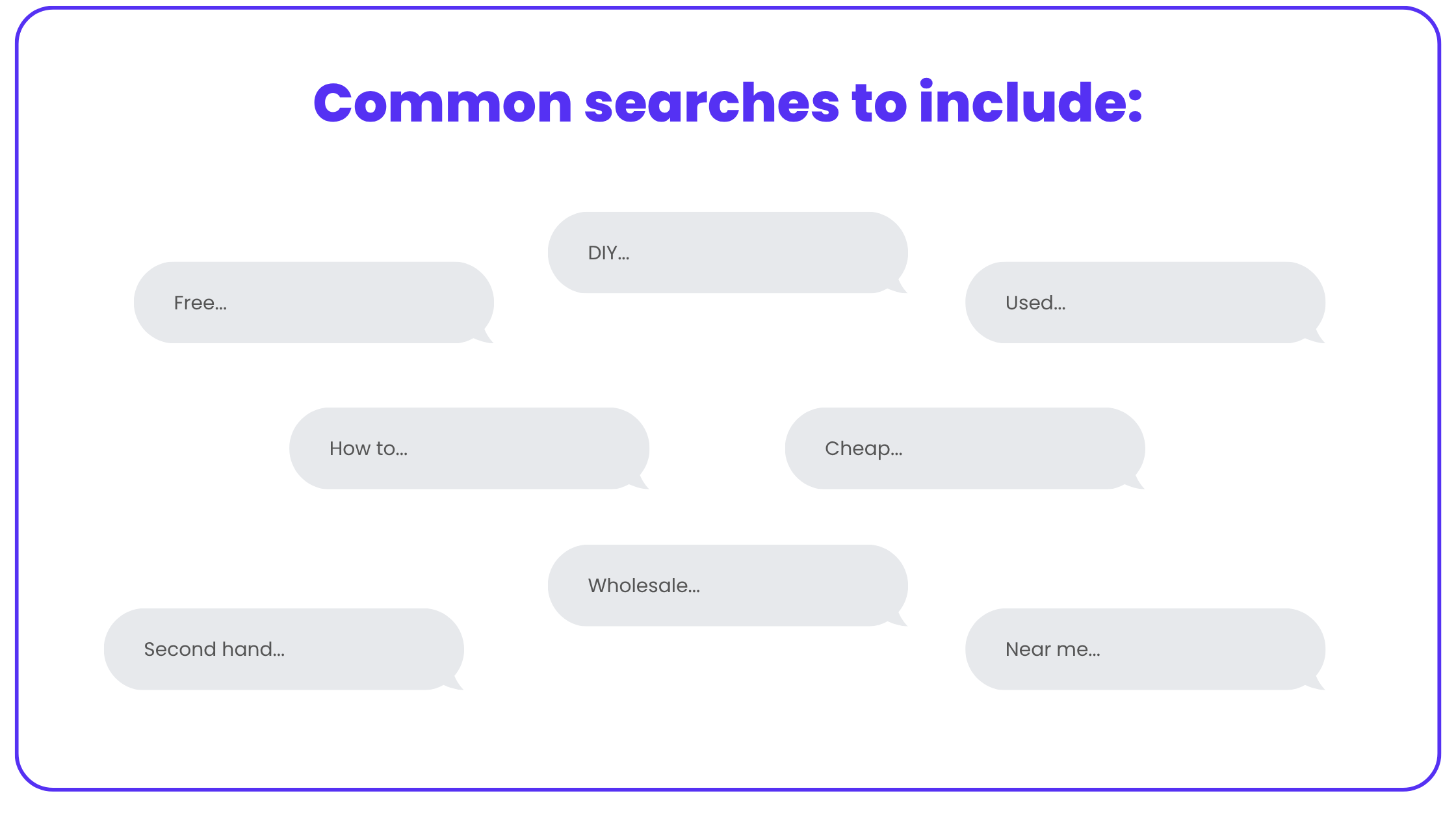
- “free”, “cheap”, “DIY”, “how to”: People looking for information or freebies, not services
- “jobs”, “careers”, “salary”, “apprenticeship”: Job hunters, not customers
- “courses”, “training”, “certificate”: People wanting to learn to do it themselves
- Competitor and brand names you don’t stock or work with
- Suburbs and cities you don’t service
- “second hand”, “used”, “wholesale”: If you don’t sell those things
Negative keywords are how you tell Google not to show your ad to anyone searching this. It’s a blocklist, and it’s the highest-return 20 minutes you can spend in your account.
One thing worth knowing: match types matter for negatives too. A broad negative like “cheap” will block any search containing that word. A phrase negative like “cheap plumber” is more surgical. Start broad on the obvious stuff such as “free”, “jobs” and “how to”, then get more precise as you learn what your account actually attracts.
This isn’t a one-off task either. Search behaviour shifts, Google’s matching gets looser over time, and new nonsense creeps in. Check your search terms report monthly, or fortnightly if you’re spending decent money.
Exclusion audiences
Meta’s a different beast. Nobody’s typing a search query, so there are no negative keywords to add. Instead you’re working with audiences, and the exclusion side of that tool is criminally underused.
Here’s what’s worth excluding:
Existing customers. If someone’s already bought, why are you paying to show them the acquisition ad? Upload your customer list as a custom audience and exclude it from your top-of-funnel campaigns. Then build a separate campaign just for them, because existing customers are your cheapest revenue.
People who’ve already enquired. Same logic. They’re in your inbox, not your ad funnel.
Serial engagers who never convert. You can build audiences based on video views, page engagement and site visits. If you’ve got a chunk of people who’ve watched twelve videos and never once clicked through, they’re entertainment, not pipeline.
Overlapping audiences between campaigns. If two of your campaigns are chasing the same people, you’re bidding against yourself. Exclude each from the other.
Geographic edges. Meta’s location targeting has a habit of drifting. Tighten your radius and know the difference between targeting people living in an area versus people recently in an area. For most local service businesses, you want residents.
Better ad copy
This is the bit we’re most passionate about, because it costs nothing and almost nobody does it.
Most businesses write ad copy designed to get the maximum number of clicks. That’s the wrong goal. You want the maximum number of right clicks, and that means your ad should actively repel the wrong people.
How? Be specific about the things that disqualify people:
- Mention price or price range. “Kitchen renovations from $25,000” will nuke your click-through rate and dramatically improve your lead quality. That’s a trade worth making.
- Name your service area. “Servicing Melbourne’s inner east” filters out half the state before anyone clicks.
- Be specific about who it’s for. “Bookkeeping for trades businesses with 5 to 50 staff” tells a sole trader to keep scrolling.
- Say what you don’t do. “Commercial fit-outs only, no residential” saves everyone’s time.
- Use qualifying language. “Custom”, “premium”, “bespoke” and “end-to-end” signal a price bracket. “Quick”, “easy” and “affordable” signal a very different one.
Yes, your click-through rate might drop. Your cost per click might even rise. But your cost per qualified lead, the only number that actually matters because it drives your revenue, usually improves noticeably.
Your landing page does the same job. A short form with a budget range dropdown, a project timeframe question, or a simple “what suburb are you in?” field will lose you some enquiries. The ones you lose are the ones you didn’t want.
What does it mean if our marketing agency says no?
Occasionally someone comes to our marketing agency wanting ads and we tell them not to run them. Not yet anyway. We’d rather explain why upfront than have you find out 3 months and several thousand dollars in.
We’ll say no when the numbers don’t work. If your average job is worth $200, your margin is thin and your industry’s cost per click is $18, ads are going to be a very expensive way to lose money. That’s maths, not pessimism.
We’ll say no when the website isn’t ready. Sending paid traffic to a slow, confusing or non-mobile-friendly site is just a faster way to waste your budget. Fix the foundation first. We’d genuinely rather build you a site that converts and switch ads on in two months than take your ad spend today.
We’ll say no when the budget’s too thin to learn anything. Campaigns need data to optimise. Below a certain spend you’re not running a campaign, you’re running a coin toss.
We’ll say no when there’s a better channel. Sometimes the honest answer is SEO, email, or simply asking your existing customers for referrals.
We’re a marketing agency. Turning down work is a strange business model. But we’d rather have a hundred clients who trust us than a thousand who don’t, and the fastest way to lose trust is to take money for something that was never going to work.
Where to start this week
Pull your Google search terms report and add twenty negative keywords. Upload your customer list to Meta and exclude it from your acquisition campaigns. Then rewrite one ad to be deliberately, unapologetically specific about who you’re for.
Three jobs, maybe an hour. You’ll feel the difference in your inbox within a fortnight.
Fancy finding out whether your ads are attracting buyers or browsers? Book a no-obligation chat with our director, Karyn Szulc. We work with businesses in every industry, right across Australia, and we’ll tell you straight if ads aren’t the answer. Also, we’ll tell you what is!
FAQs
Won’t adding negative keywords tank my traffic?
Probably a bit, yes. And that’s the point! You’ll lose clicks from people who were never going to buy, which means your budget stretches further across the ones who might. Volume isn’t the goal, qualified enquiries are. If your traffic looks healthy but your sales don’t, fewer clicks is genuinely the right medicine. Get in touch if you have any questions. No-obligation insights for every industry, every corner of Australia.
How often should negative keywords be reviewed?
Monthly if you’re spending modestly, fortnightly if you’re spending serious money. Search behaviour shifts, Google’s matching loosens over time, and fresh nonsense always creeps in. 20 minutes a fortnight keeps the rubbish out. If that’s 20 minutes you simply don’t have, our ad management service handles it as standard. Have a no-obligation chat with our director, Karyn Szulc. We help businesses of all shapes, sizes and industries, everywhere in Australia.
Should I put prices in my ads?
If you’re sick of budget mismatches, absolutely. “Renovations from $25,000” will drop your click-through rate and lift your lead quality significantly. Fewer calls, better calls. It feels counterintuitive the first time, but the maths works. Our fab copywriters do this well, balancing filtering with appeal. Ask us for an ad copy review, no obligation, no matter whether you’re in Melbourne, Brisbane or anywhere else.
Do I need a landing page for online ads, or will my homepage do?
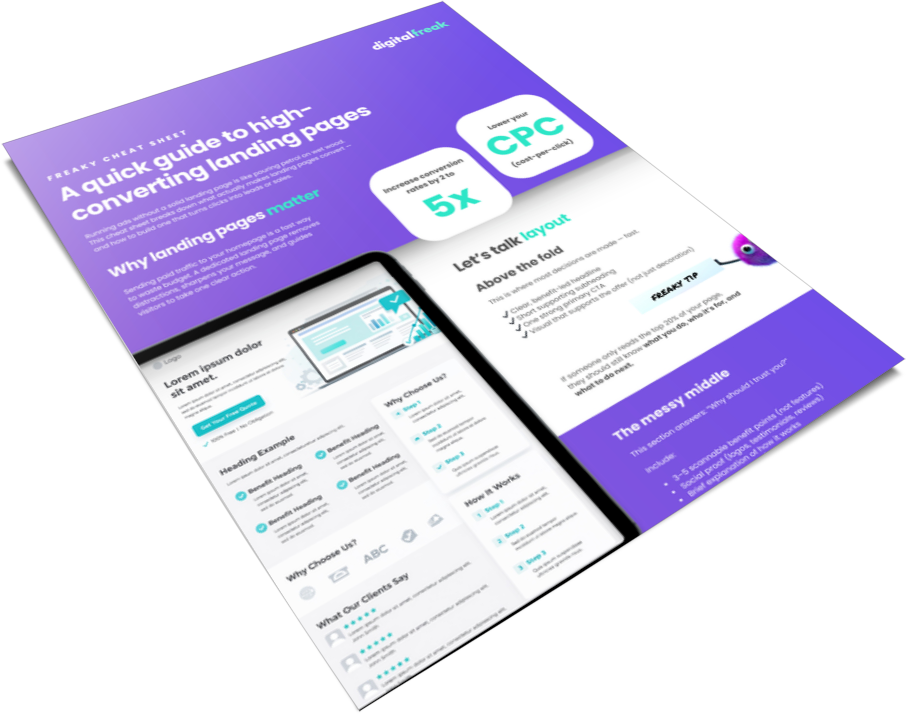
Your homepage is a hallway with 12 doors. A landing page is one door with a sign on it. Ad traffic converts far better when the page matches exactly what they clicked. We build conversion-focused landing pages for businesses all over Australia alongside campaigns rather than bolting them on later. Book a free call with our director, Karyn Szulc, and we’ll show you some examples.

When clients work with me, they get exactly what they want - no-nonsense, authentic digital marketing that works! With my industry experience, eye for detail, and a team that goes the extra mile, every client gets the personalised, expert treatment they deserve. Let’s get you online – and growing!