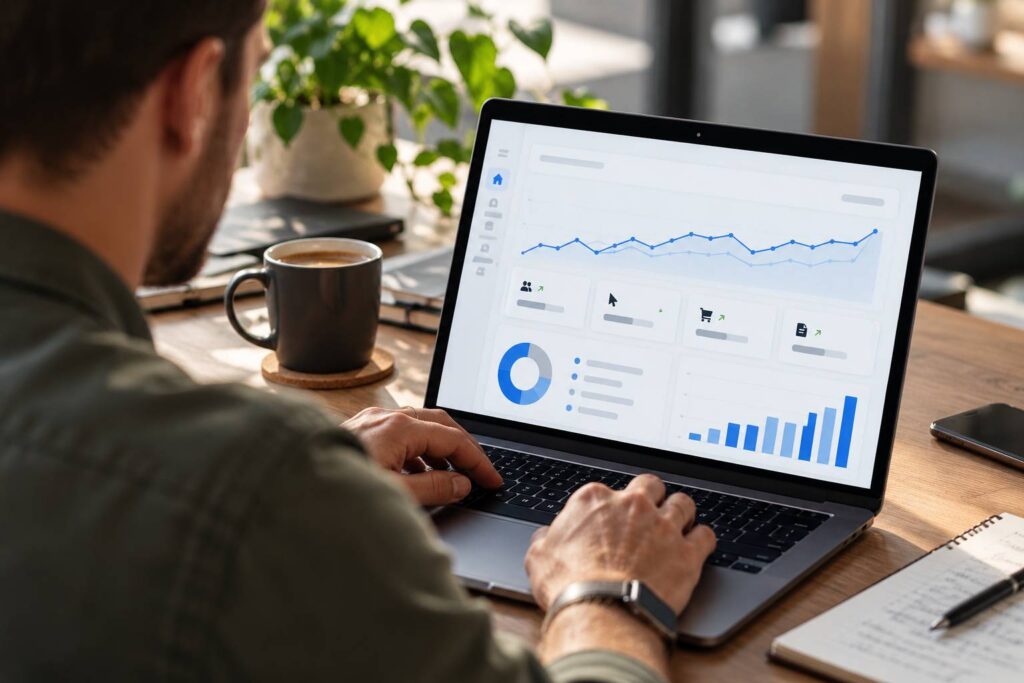
A Geelong landscaping business posts on Instagram five times a week. Followers grow, likes roll in and the owner’s phone barely rings. Meanwhile, a two-person electrical business in Townsville with a plain website gets steady enquiries from people searching “emergency electrician near me”. The first business has a following. The second has customers. So, what’s going on?
The difference usually isn’t luck or budget. It comes down to conversion: how many of the people who reach a website actually take the next step. Improving that number is called conversion rate optimisation, or CRO. For most small businesses, it’s one of the cheapest ways to grow, because it gets more value out of visitors they’re already attracting.
What a conversion actually is
A conversion is any action a business wants a visitor to take. For an online shop, it’s a sale. For a physio clinic, it might be a booking. For a builder, it’s a quote request, a phone call or a form submission.
The conversion rate is simple maths:
Conversion rate = (number of conversions / number of visitors) × 100
If 1,000 people visit a website in a month and 20 of them fill in an enquiry form, the conversion rate is 2%.
CRO is the process of working out why the other 980 left, then fixing what’s within the business’s control. It isn’t about tricks, countdown timers or pushy pop-ups. Mostly, it’s about removing the small frustrations that make people give up.
Why CRO matters more than chasing traffic
Most small business owners think about growth in terms of getting more people to the website. More traffic usually costs more money, either in ad spend or in the hours it takes to create content.
CRO works from the other direction. Take a business with 1,000 monthly visitors converting at 1%: that’s 10 enquiries. Lift the rate to 2% and it gets 20 enquiries from the same traffic. Nothing extra goes on ads. The website has simply started doing its job properly.
There’s a knock-on effect for paid advertising too. If a business runs Google Ads and its website converts poorly, every click costs more in real terms. A better-converting site makes every advertising dollar go further.
What counts as a “good” conversion rate?
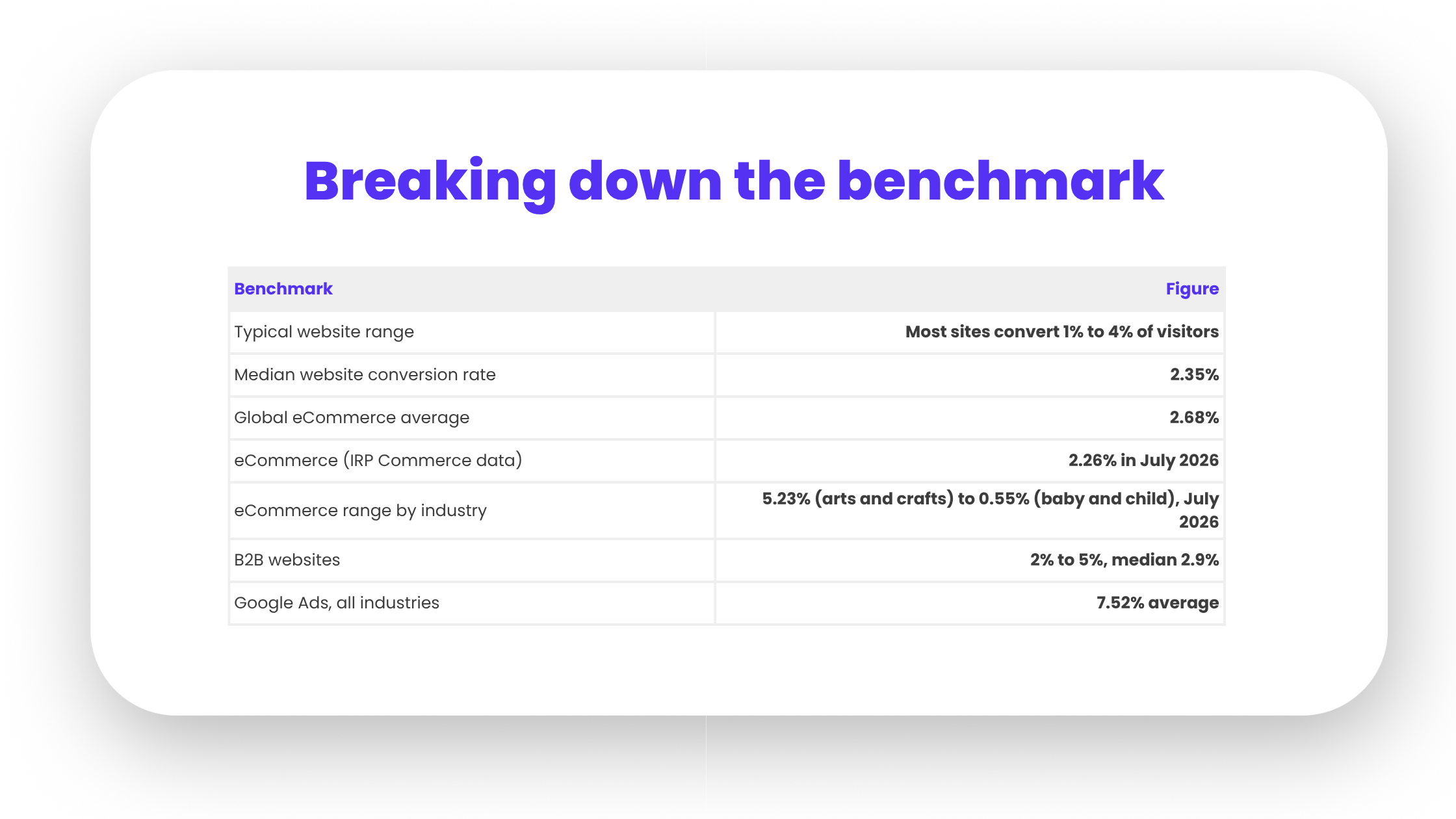
This is the question most owners ask first, and the honest answer is “it depends”. Benchmarks vary depending on the industry, the price of what’s being sold, the type of conversion and where the visitors come from. Still, published figures give a useful starting point.
| Benchmark | Figure |
|---|---|
| Typical website range | Most sites convert 1% to 4% of visitors |
| Median website conversion rate | 2.35% |
| Global eCommerce average | 2.68% |
| eCommerce (IRP Commerce data) | 2.26% in July 2026 |
| eCommerce range by industry | 5.23% (arts and crafts) to 0.55% (baby and child), July 2026 |
| B2B websites | 2% to 5%, median 2.9% |
| Google Ads, all industries | 7.52% average |
A few things are worth knowing before treating any of these as a target.
First, most benchmarks come from global or US-heavy data sets, and many are published by software companies that sell CRO tools. That doesn’t make them wrong, but it’s a good reason to treat them as rough guides rather than rules. Australian-specific benchmarks for small businesses are hard to find.
Second, what’s being sold makes a huge difference. Someone might buy a $25 candle on impulse, but nobody books a $40,000 kitchen renovation on their first visit. High-price, high-consideration purchases naturally convert at lower rates, and that’s fine.
Third, the type of conversion changes things. A “download our free checklist” form will convert far better than a “buy now” button, because it asks less of the visitor.
For most small businesses, a sensible rule of thumb is this: below 1% usually points to something worth fixing, 2% to 3% is respectable, and anything consistently above 4% or 5% means the site is pulling its weight. The most useful benchmark is the business’s own past performance. A site moving from 0.8% to 1.6% has doubled its results, whatever the industry averages say.
Why organic social media rarely converts well
This is where many small businesses get caught out. They spend hours on Facebook and Instagram posts, see the engagement and wonder why sales don’t follow.
The problem is the mindset of the audience. People scrolling social media are mostly there to relax, catch up with friends or kill a few minutes at the bus stop. They aren’t hunting for a plumber or comparing accounting firms. When an organic post sends them to a website, it’s asking them to switch from passing the time to making a decision. Most won’t.
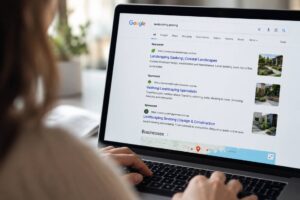
Compare that with someone who searches Google for “dentist Parramatta open Saturday”. They have a need right now, and they’re ready to act. That’s why search traffic, both paid and organic, tends to convert better than casual social traffic. It’s also why Google Ads can average a 7.52% conversion rate across industries. The intent is already there.
Paid social ads are different from organic posts, and the difference is important. Ads on Meta platforms like Facebook and Instagram can be shown to specific audiences based on location, interests and behaviour, or to people who’ve already visited the website. They can also be paired with a dedicated landing page and a clear offer. That combination of targeting, a strong reason to click and a page built for one action is what organic posts usually lack. Social media marketers increasingly describe it this way: organic content builds the audience, and paid.
None of this means organic social is a waste of time. It builds familiarity and trust, and it gives potential customers a feel for the business. Plenty of people see a brand on Instagram, forget about it, then search for it by name weeks later. That delayed path is one reason organic social is often, because the credit tends to go to the final click. It’s best judged as an awareness channel, though, not a sales machine. Judging it by direct conversions usually leads to disappointment.
The metrics worth watching (and the ones to ignore)
Free tools like Google Analytics show plenty of numbers. Only a handful really matter to a small business.
- Conversion rate by traffic source. This shows whether Google, social media, email or ads bring in people who act. It’s often the most revealing report a business owner can look at.
- Conversion rate by device. If mobile visitors convert at half the rate of desktop visitors, the mobile experience probably needs work.
- Top exit pages. These are the pages where people most often leave the site. A product page or a contact page with heavy exits deserves a closer look.
- Cost per conversion. For anyone running ads, this matters far more than cost per click.
Likes, follower counts and raw page views feel good, but they don’t pay wages. They’re worth tracking for context, and that’s about it.
One technical point catches out a lot of businesses: conversions need to be tracked properly in the first place. If enquiry forms, phone calls from the website and online bookings aren’t set up as conversions in analytics, the business is guessing. Getting that tracking right is often the most valuable first step.
The common issues you may be experiencing
In practice, most small business websites lose customers to the same handful of problems.
An unclear message. A visitor should be able to tell within a few seconds what the business does, who it’s for and where it operates. “Innovative solutions for tomorrow” says nothing. “Commercial cleaning for Perth offices” says everything.
A weak or hidden call to action. If the “Get a quote” button is buried at the bottom of the page or sits in grey text, people won’t find it. Button wording helps too. “Get my free quote” tells people what happens next, while “Submit” doesn’t.
Forms that ask too much. Every extra field gives someone a reason to quit. A first enquiry rarely needs a budget range, company size and postcode all at once.
Poor mobile experience. Many Australians browse on their phones. Text that’s too small, buttons that are hard to tap and phone numbers that can’t be clicked to call all cost enquiries. Every business owner should test their own site on their own phone, filling in the forms as a customer would.
Slow loading. Large, uncompressed images are the usual culprit. Google’s free PageSpeed Insights tool gives a quick health check.
No proof. Reviews, testimonials, before-and-after photos, industry memberships and recognisable client logos all reassure people. Specific testimonials work best. “Great service” is pleasant, but “Fixed our hot water system the same afternoon and explained the cost upfront” actually persuades.
Surprises at the end. For online stores, unexpected shipping costs at checkout are a well-known reason for abandoned carts. Showing costs early, or offering a free shipping threshold, can make a real difference.
How to start without a big budget
CRO doesn’t need expensive software. A practical starting sequence looks like this:
- Make sure conversions are tracked properly.
- Check the conversion rate by traffic source and device to find the weakest point.
- Fix the obvious problems first: unclear headlines, hidden buttons, long forms and broken mobile layouts.
- Ask a few real customers or friends to use the site while thinking aloud. It’s uncomfortable to watch and incredibly revealing.
- Make one meaningful change at a time, so it’s clear what made the difference.
A caution on testing: formal A/B testing, where two versions of a page are shown to different visitors, needs a fair amount of traffic to produce reliable results. A site with a few hundred visitors a month can’t run a meaningful test on button colours. Small businesses are usually better off making clear, sensible improvements and watching the trend over a few months. That’s also a far better use of time than fiddling with tiny design details.
The bigger picture
CRO is often treated as a website task, but it’s really about seeing the business through a customer’s eyes. Every unclear headline, extra form field or missing review is a small moment where a potential customer wonders whether to bother.
A sensible approach for a small business is to fix the website before spending more on traffic, use organic social to build familiarity rather than expecting sales from it, and use search and paid ads when the goal is enquiries. A website that converts well makes every other piece of marketing work harder.
The businesses that grow steadily online aren’t always the ones with the biggest audiences. They’re often the ones that made it easy to say yes.

FAQs
How long does it take to see results from CRO?
It depends on how much traffic the site gets. Fixing obvious problems like a broken mobile form or a hidden quote button can lift enquiries within weeks. Smaller tweaks take longer to judge, because low-traffic sites need a few months of data before a trend is reliable. The best approach is to treat CRO as ongoing work rather than a one-off job, and review progress every month or quarter. You can also book a free call with our director, Karyn Szulc, for obligation-free insights!
Should I fix my website before running ads?
In most cases, yes. If someone pays for a click and lands on a slow, confusing page, that money is wasted. Even a few basic fixes can make the same ad budget go much further, like a clear headline, an obvious call to action and a mobile-friendly form. At Digital Freak, our Melbourne team often reviews a website before launching Google or Meta ads for that reason. Book a free strategy call and we’ll tell you honestly whether your site is ready.
Will a new website automatically improve my conversion rate?
Not necessarily. A fresh design can look great and still convert poorly if the message is vague, the forms are long or the pages load slowly. Sometimes a redesign is the right call, especially when a site is outdated or hard to update. Other times, targeted fixes deliver better results for far less money. Before committing to a full rebuild, look at your data and find out exactly where visitors are dropping off.
How do I know if my conversion tracking is set up properly?
Try it yourself. Submit your own contact form, tap your phone number on mobile or place a test order, then check whether it shows up in Google Analytics or your ads account within a day or two. If nothing appears, your tracking is likely missing or broken. That’s surprisingly common. Digital Freak can run a quick tracking check for Australian small businesses. Get in touch and we’ll show you what you’ve been missing.

When clients work with me, they get exactly what they want - no-nonsense, authentic digital marketing that works! With my industry experience, eye for detail, and a team that goes the extra mile, every client gets the personalised, expert treatment they deserve. Let’s get you online – and growing!