

User-generated social content has quietly become one of the most powerful tools available to small businesses. Not because it is trendy, but because it works.
People trust people. They believe real experiences more than polished ads. They listen to customers more than brands. When someone sees a real person using a product, sharing a result, or explaining why they chose a business, it carries weight that no campaign headline can replicate.
For small businesses, this matters even more. You may not have huge budgets, production teams, or endless creative resources. What you do have is customers with stories, opinions, and real-world results. When you invite them into your marketing, your brand becomes more human, more credible, and easier to trust.
This guide walks through practical, proven user-generated content ideas that any small business can use. These ideas focus on outcomes, not hype. They are built for consistency, not one-off posts. Most importantly, they are designed to fit into real business workflows without burning time or energy.
What user-generated content really means
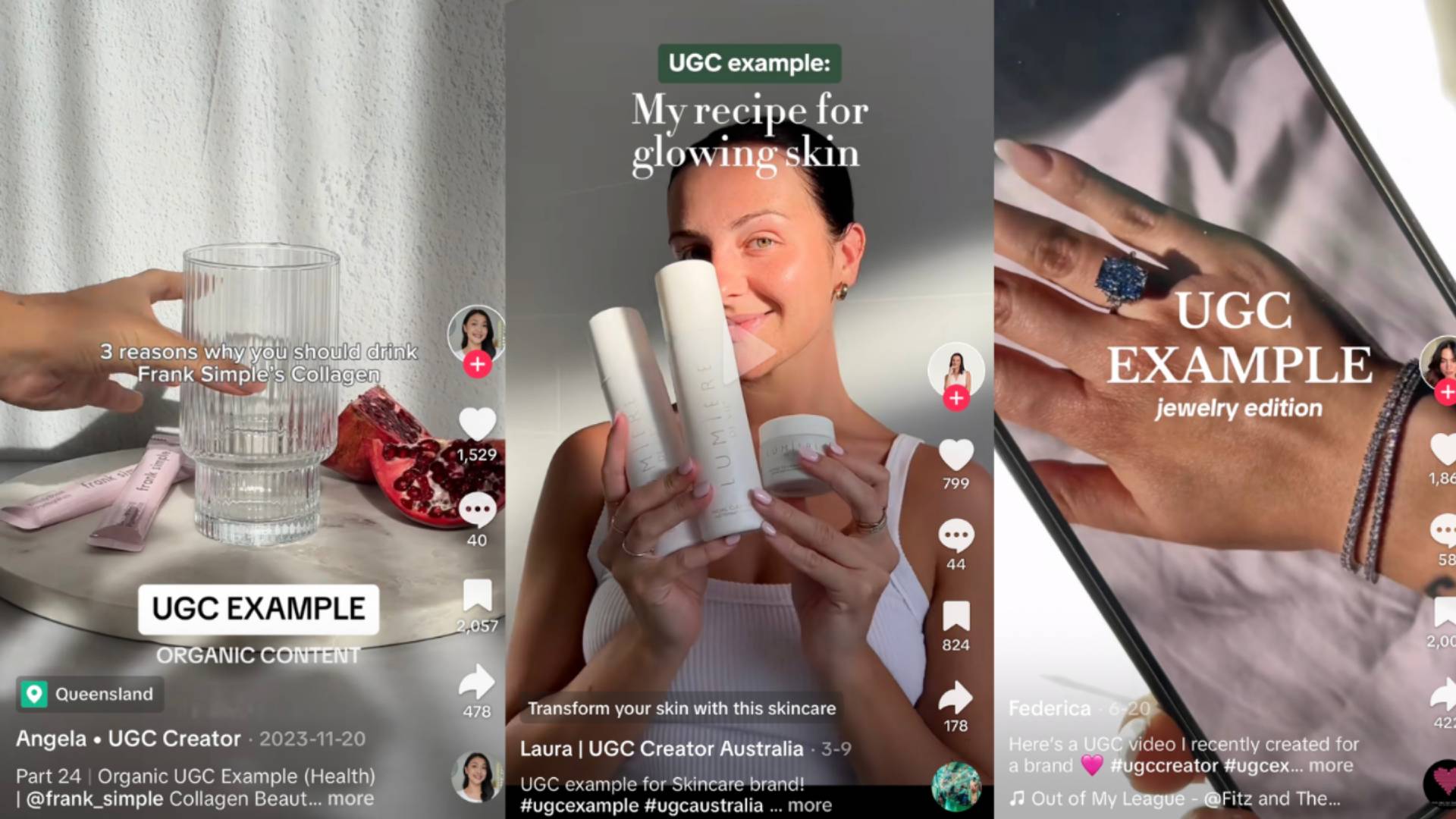
User-generated content, often shortened to UGC, is any content created by customers rather than the business itself. That can include photos, videos, written reviews, testimonials, social posts, or comments that feature your product, service, or experience.
It does not need to be perfect. In fact, slightly imperfect content often performs better because it feels genuine.
Research consistently shows that consumers trust peer content far more than brand-created messaging. Studies from Nielsen have shown that reviews and real customer experiences strongly influence buying decisions, especially for local and service-based businesses.
The goal of UGC is not to replace professional content. It is to support it. Think of it as social proof that runs alongside your website copy, ads, and social posts.
Why UGC works so well for small businesses
Small businesses often rely on trust, reputation, and relationships. User-generated content supports all three.
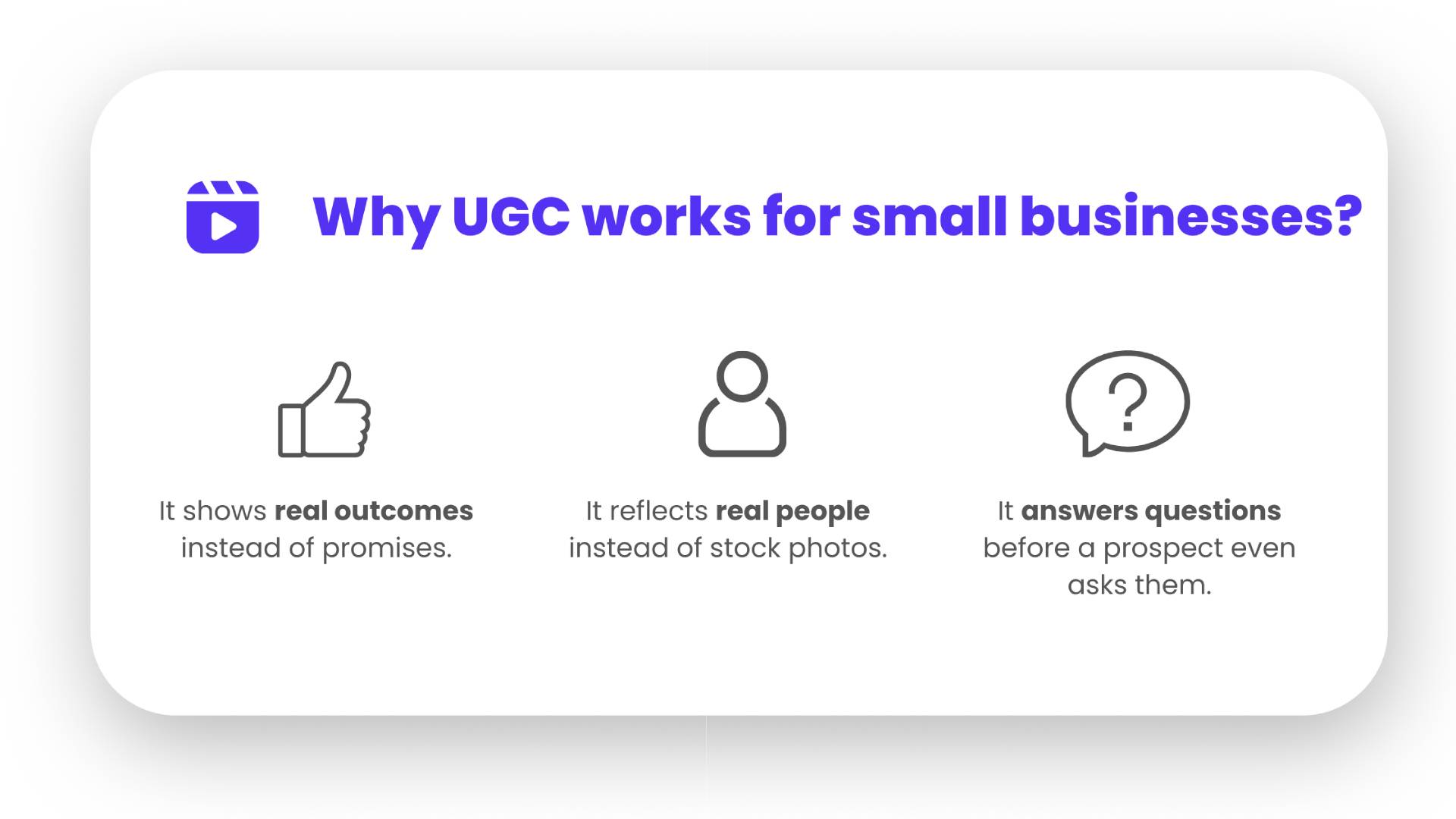
- It shows real outcomes instead of promises.
- It reflects real people instead of stock photos.
- It answers questions before a prospect even asks them.
UGC also reduces content pressure. Instead of constantly asking what you should post next, you can tap into what customers are already sharing.
When done well, it improves engagement, increases conversions, and strengthens brand credibility across platforms.
Reviews that go beyond star ratings
Online reviews are the most familiar form of user-generated content, but many businesses stop at collecting star ratings.
The real value sits in the details.
Encourage customers to explain what problem they had before they found you. Ask what changed after working with you. Invite them to share one specific outcome rather than a generic compliment.
You can prompt better reviews by asking better questions in follow-up emails or messages. Simple prompts work well.
- What made you choose us over other options?
- What stood out during your experience?
- What result mattered most to you?
Once collected, reviews should not live in isolation. Reuse them across your website, social channels, email campaigns, and even sales conversations.
A strong review is reusable content. Treat it that way.
Before and after stories that focus on change
Before and after content is powerful because it shows transformation. This works particularly well for service businesses, trades, wellness providers, designers, consultants, and educators.
The key is to focus on the journey, not just the visual contrast.
Instead of posting two images and moving on, tell the story behind them. What was the starting point? What challenges existed? What decisions were made along the way? What changed in the end?
This approach avoids exaggerated claims and builds credibility. It also helps prospects see themselves in the story rather than just observing from the outside.
Always ask for permission before sharing. Be clear about how the content will be used. Most customers are happy to help when they feel respected and acknowledged.
Customer photos in real-world settings
Polished product photos have their place, but nothing beats seeing a product or service in a real environment.
Encourage customers to share photos of how they use your product at home, at work, or in daily life. For service businesses, this might include finished projects, styled spaces, or results over time.
You can create simple incentives such as a monthly feature, a small giveaway, or a shout-out on your page. The reward does not need to be large. Recognition often works just as well.
When resharing customer photos, add context. Explain who they are, what they used, and why it worked for them. This turns a single image into a useful piece of content rather than filler.
Short customer videos that feel natural
Video content does not need to be high production to be effective. In fact, casual videos often perform better because they feel honest.
Ask customers to record short clips answering one question. Keep it focused.
- Why did you choose this business?
- What problem did it solve for you?
- What would you tell someone considering it?
These videos can be filmed on a phone. They can be vertical. They can include pauses and personality. That is the point.
Short customer videos work well on social platforms, landing pages, and even inside ads. They also build familiarity. Seeing real faces helps people feel more comfortable reaching out.
Social media mentions and tags
Many customers already share content about the businesses they use. The mistake is not noticing or not responding.
Monitor mentions, tags, and location check-ins. When someone shares a positive experience, engage with it. Thank them. Ask if you can repost. Add it to your saved content.
Over time, this builds a library of authentic material that reflects how your brand shows up in the real world.
Reposting customer content also encourages others to do the same. It signals that you value your community, not just your own voice.
Questions from customers turned into content
Some of the best content ideas come directly from customer questions.
Every time someone asks a question via email, phone, or social media, you are being handed a content opportunity. These questions reflect real concerns, hesitations, and decision points.
Turn them into posts, stories, short videos, or FAQ sections. You can even quote the question anonymously and then answer it publicly.
This type of content performs well because it meets people where they are. It also reduces repetitive inquiries over time, saving your team effort.
User-generated tips and advice
If your customers use your product or service regularly, they likely have insights worth sharing.
Invite them to share tips, shortcuts, or creative uses. This works particularly well for software, tools, fitness services, education, and lifestyle brands.
You might ask something simple like, what is one thing you have learned since using this service?
Feature one response per week. Attribute it clearly. Add your own context if helpful but let their voice lead.
This positions your brand as a facilitator of knowledge rather than the sole authority. That builds trust.
Community stories and spotlights
Small businesses often serve specific communities. Local areas, industries, interests, or values.
Highlighting customer stories strengthens those connections.
You can run short spotlights that introduce a customer, explain how they use your service, and share a small insight from their experience. These do not need to be long or overly personal.
This approach works well for local businesses, B2B services, and membership-based brands. It reinforces that you are part of a broader ecosystem, not operating in isolation.
Contests that encourage meaningful contributions
Contests can generate a lot of content quickly, but they need structure to avoid low-quality submissions.
Instead of asking for anything and everything, focus the brief. Ask for a photo using a specific feature. Ask for a short story about a result. Ask for a tip or lesson learned.
Make the barrier to entry reasonable. Make the instructions clear. And always follow through by showcasing entries, not just announcing a winner.
When people see their contributions acknowledged, participation increases over time.
Feedback posts that show you listen
Not all user-generated content needs to be praise.
Sharing how customer feedback led to an improvement can be powerful. It shows responsiveness and accountability.
You might post something like, several customers told us they wanted this option, so we added it.
This builds confidence and demonstrates that voices matter. It also encourages more feedback, which helps your business improve.
How to collect UGC without annoying customers
The biggest mistake businesses make is asking too much, too often, or in the wrong way.
Timing matters. Ask when the value is fresh. After a successful project. After a positive interaction. After a win.
Keep requests simple. One clear ask beats a long list of instructions.
Always say thank you. Always credit contributors. Always respect boundaries.
When customers feel appreciated rather than used, participation becomes natural.
Making UGC work across channels
User-generated content should not live in one place.
A single review can support a website section, a social post, an email snippet, and a sales proposal. A customer video can live on a landing page and inside an ad.
Build simple systems for storing and tagging content so it is easy to reuse. Even a basic folder structure can make a difference.
Consistency matters more than volume. Regularly sharing one strong piece of UGC builds far more trust than occasional bursts.
Measuring what matters
Do not measure user-generated content by likes alone.
Look at engagement metrics like engagement quality, website conversions, enquiry rates, and time on page. Pay attention to the comments and messages that follow.
UGC often plays a supporting role in the decision-making process. It reassures. It reduces friction. It answers doubts quietly.
That impact may not always show up immediately, but it compounds over time.

Work with a team that turns real stories into real results
User-generated content works best when it is collected with intent and used strategically. It is not about reposting random reviews or hoping customers tag you. It is about building social media systems that capture real experiences and turn them into trust-building content across your website, ads, and social channels.
At Digital Freak, we help small businesses do exactly that. We create clear UGC strategies that fit your brand, your audience, and your goals. From identifying the right moments to ask for content, to shaping it into high-performing campaigns, we focus on outcomes, not noise.
If you want user-generated content that drives enquiries, supports sales, and strengthens credibility, work with a team that understands how to make it practical and sustainable.
Book a free strategy call with Digital Freak and let’s turn your customers’ stories into growth!
FAQs
How do you encourage customers to create user-generated content?
Timing and simplicity matter. Ask for content after a positive experience, keep the request clear, and explain how it helps others. Most customers are happy to share when the process feels respectful and easy. Digital Freak in Melbourne designs UGC collection systems that feel natural, not pushy, and fit into your existing workflows. Book a free strategy call to build a system that works for your business.
Is user-generated content suitable for service-based businesses?
Yes. Service businesses often benefit the most from UGC because trust is critical. Testimonials, reviews, project photos, and short client videos help prospects understand your process and results. Whether you operate locally or nationally, UGC builds reassurance. Digital Freak works with service-based businesses across Melbourne and beyond to turn client experiences into powerful marketing assets. Book a free strategy call to explore your options.
Can user-generated content support SEO and website performance?
User-generated content supports SEO by adding fresh, relevant content that reflects real search intent. Reviews and testimonials also improve on-page trust signals, which can increase conversion rates. When structured properly, UGC complements your broader SEO strategy. Digital Freak integrates UGC into websites in a way that supports rankings, engagement, and lead generation. Book a free strategy call to strengthen your content strategy.
How do you use user-generated content across multiple marketing channels?
Strong UGC should be reused across your website, social media, email marketing, and paid ads. One customer story can support several touchpoints when planned correctly. Digital Freak helps businesses create systems to store, repurpose, and deploy UGC consistently without extra workload. This ensures your content works harder across channels. Book your free call to make your content more efficient.

When clients work with me, they get exactly what they want - no-nonsense, authentic digital marketing that works! With my industry experience, eye for detail, and a team that goes the extra mile, every client gets the personalised, expert treatment they deserve. Let’s get you online – and growing!