
One of the most common conversion problems we see is not bad copy or weak offers. It is the wrong page doing the wrong job.
A blog post and a landing page are built for very different types of intent. When they get mixed up, traffic arrives but action stalls. Leads hesitate. Wasted ad spend increases.
If you want content that works harder, you need to match the page type to how ready someone is to act.
Start with buyer intent
Before you decide whether something should be a public page, an ad-only page, or a blog post, ask one simple question.
Why is this person here?
Some visitors are researching. They want clarity, reassurance, and context. Others have clicked an ad with their wallet already half open. They want a solution and a next step.
If your page does not reflect that mindset, it will underperform no matter how good the design looks.
When a blog post is the right choice
Blog posts work best when intent is early or mixed.
They are ideal for people who are still learning, comparing options, or trying to understand a problem. Search traffic sits here most of the time.
Use a blog post when:
- You want to attract organic traffic
- The topic answers common questions
- The reader may not be ready to convert yet
- Education builds trust before a decision
A strong blog post should feel generous. It should explain the problem, unpack the options, and help the reader make sense of their situation.
What it should not do is force a hard sell. That usually backfires.
Instead, let the conversion be a soft next step. Download a guide. Book a call. Read a related article. You are warming intent, not closing it.
When a landing page is the better option
Landing pages are built for action.
They work best when someone arrives with focus and momentum. This is almost always the case with paid traffic.
Ad clicks are not casual. Someone has noticed a message, felt a pain point, and decided to act. Your page needs to respect that urgency.
Use a landing page when:
- Traffic comes from ads or email campaigns
- The offer is specific
- There is one clear action to take
- You want to remove distractions
A good landing page does not explain everything.
It highlights the problem. Shows a clear solution. Reduces doubt. Then asks for action.
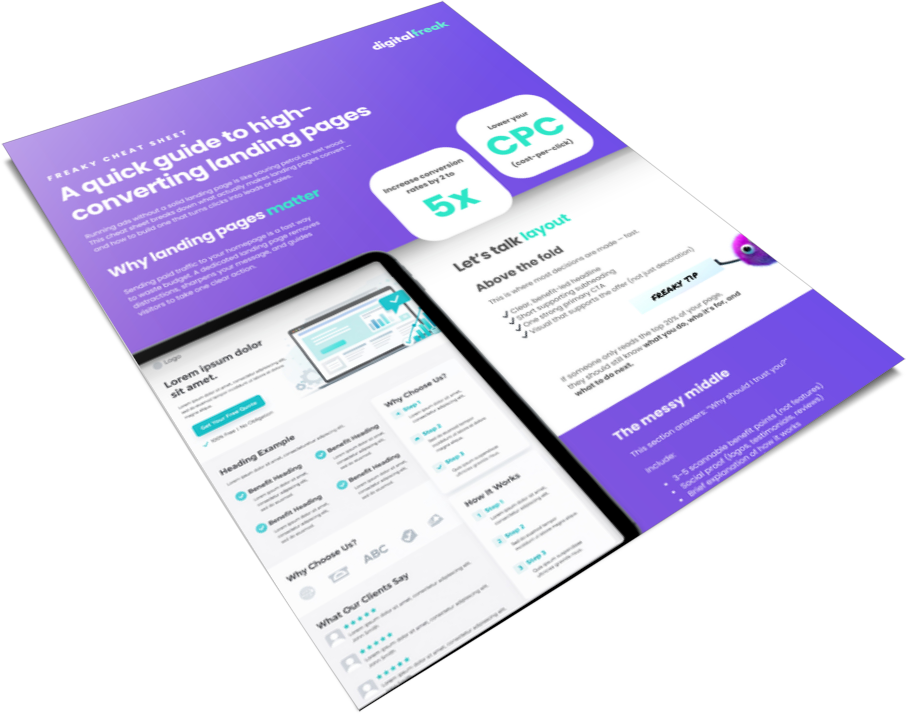
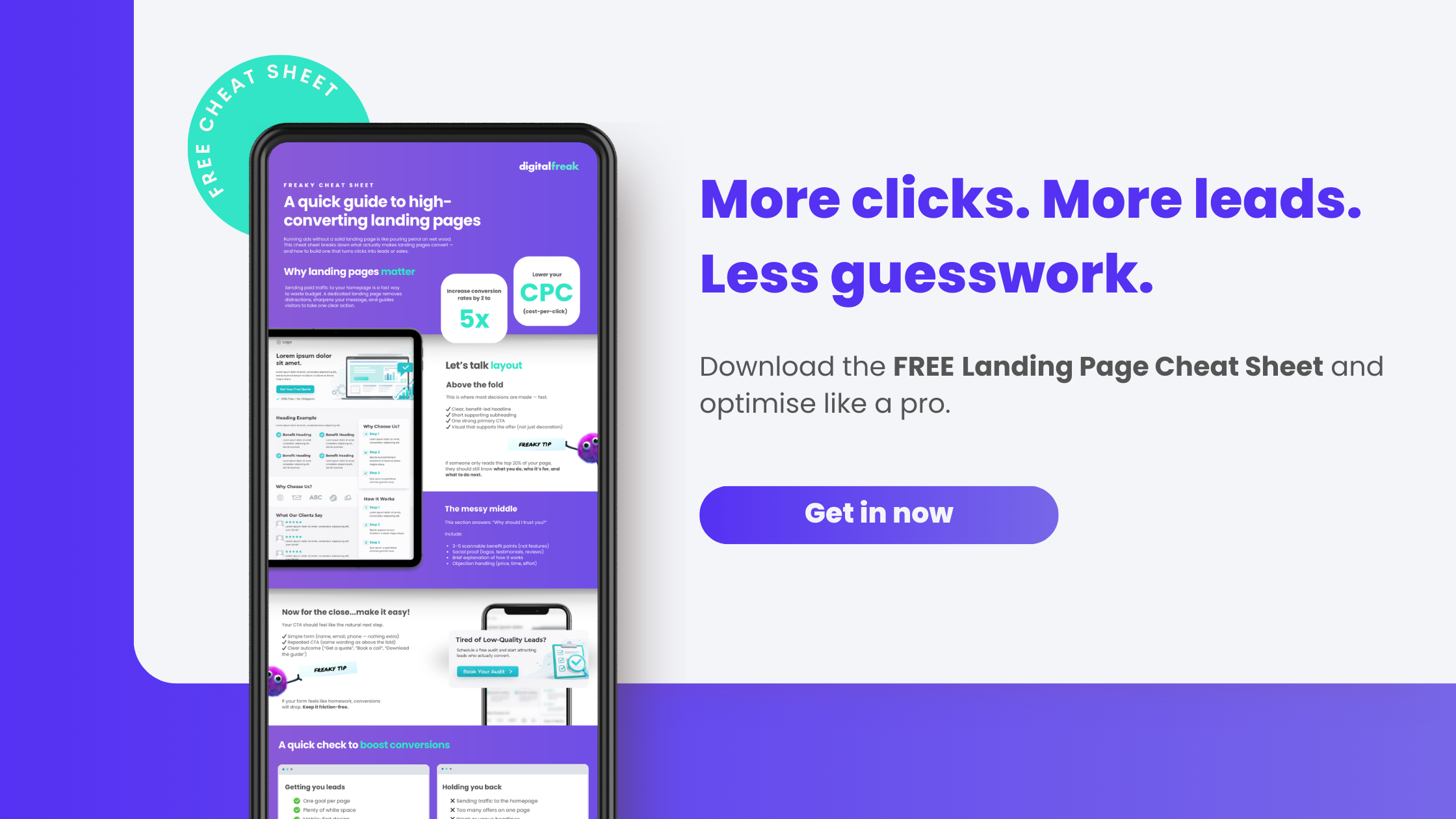
If you’re stuck, our free downloadable landing page cheat sheet is a great resource!
Should a landing page be public or ad-only?
This is where many businesses get stuck.
Not every landing page should be hidden. Not every one of them should be indexed either.
Keep a landing page ad-only when:
- It is tightly written for a specific campaign
- It assumes high intent
- It skips broad education
- It is focused on speed and conversion
Make a landing page public when:
- The problem is common and search-friendly
- The content genuinely helps on its own
- It balances education with conversion
- It can support both SEO and ads
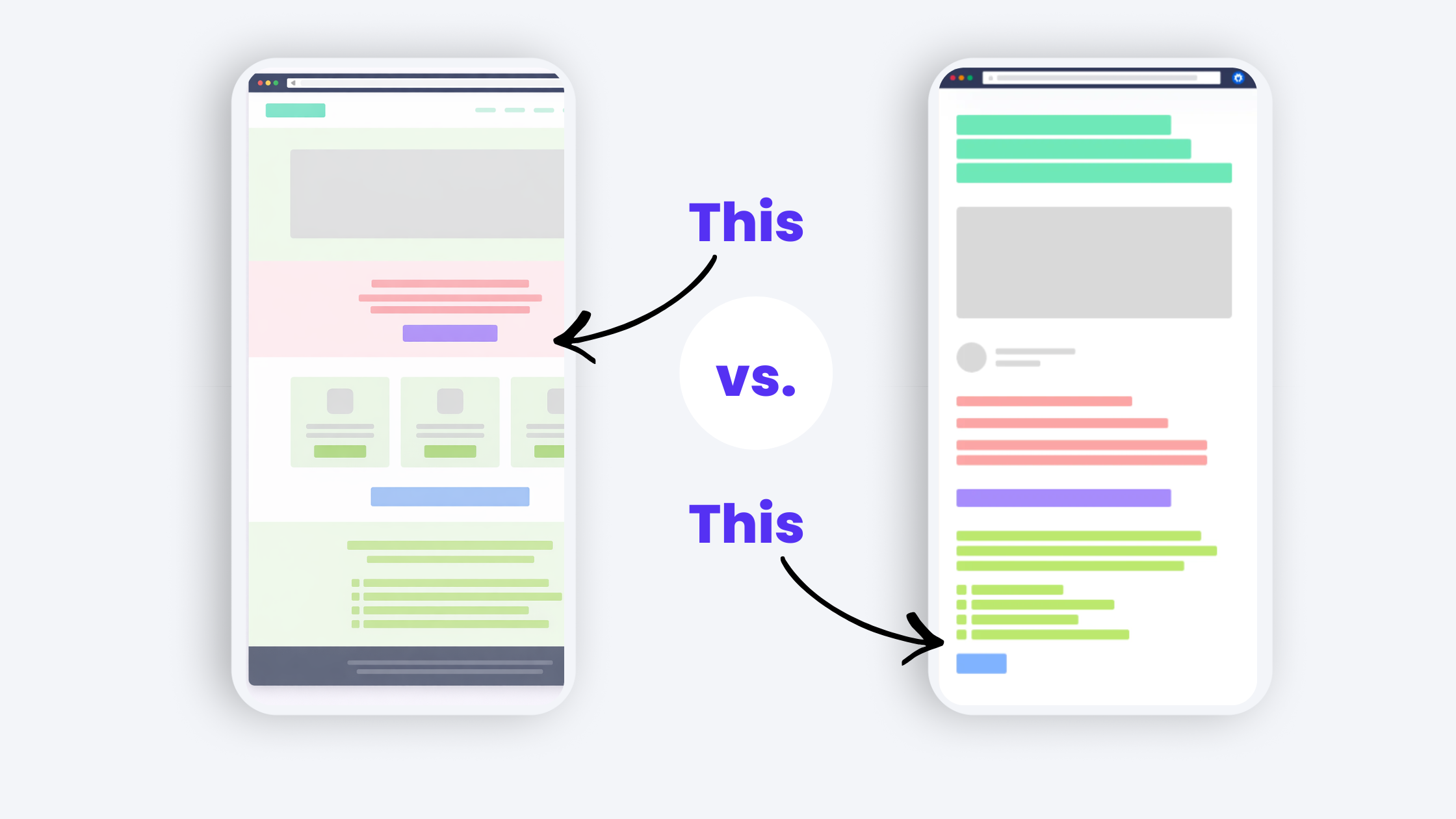
The key difference is depth and tone. A public-facing landing page needs enough context to stand on its own. An ad-only page can be sharper and more direct because the ad has already done some of the work.
Start Building Pages That Match Intent and Drive Conversions
At Digital Freak, we design landing pages and content that meet people where they are and guide them to act.
If you want expert eyes on your setup, chat to our team or download our free landing page cheat sheet for a clear, practical framework you can use straight away.

When clients work with me, they get exactly what they want - no-nonsense, authentic digital marketing that works! With my industry experience, eye for detail, and a team that goes the extra mile, every client gets the personalised, expert treatment they deserve. Let’s get you online – and growing!