
As EOFY 2026 creeps closer, many Australian businesses feel the same mix of pressure and possibility. You are pulling reports together, defending your spend, and trying to plan a stronger year ahead with money that never feels quite enough.
Marketing budgets in Australia are under scrutiny. In recent industry surveys, many local businesses reported flat or only slightly increased marketing spend, despite higher costs for media, tools and staff. That means you need to get more from roughly the same pool of money.
The good news is that you can often stretch your budget by changing how you spend, not just how much. The focus shifts from “more activity” to “smarter activity”.
Here are seven practical, research informed ways to do that for 2026–27
#1 Shift spend towards what already works
Before adding new channels, squeeze more value from what already performs.
Start with a simple but honest review:
- Pull a full year of data from your main platforms
- Look at lead volume, lead quality and actual revenue, not just clicks
- Group activity into broad areas such as search, social, email, events, partnerships
A common pattern in Australian businesses is that a small number of channels produce most of the results. Search and email often punch above their weight for lead generation and ecommerce. Some social activity looks busy but doesn’t produce revenue.
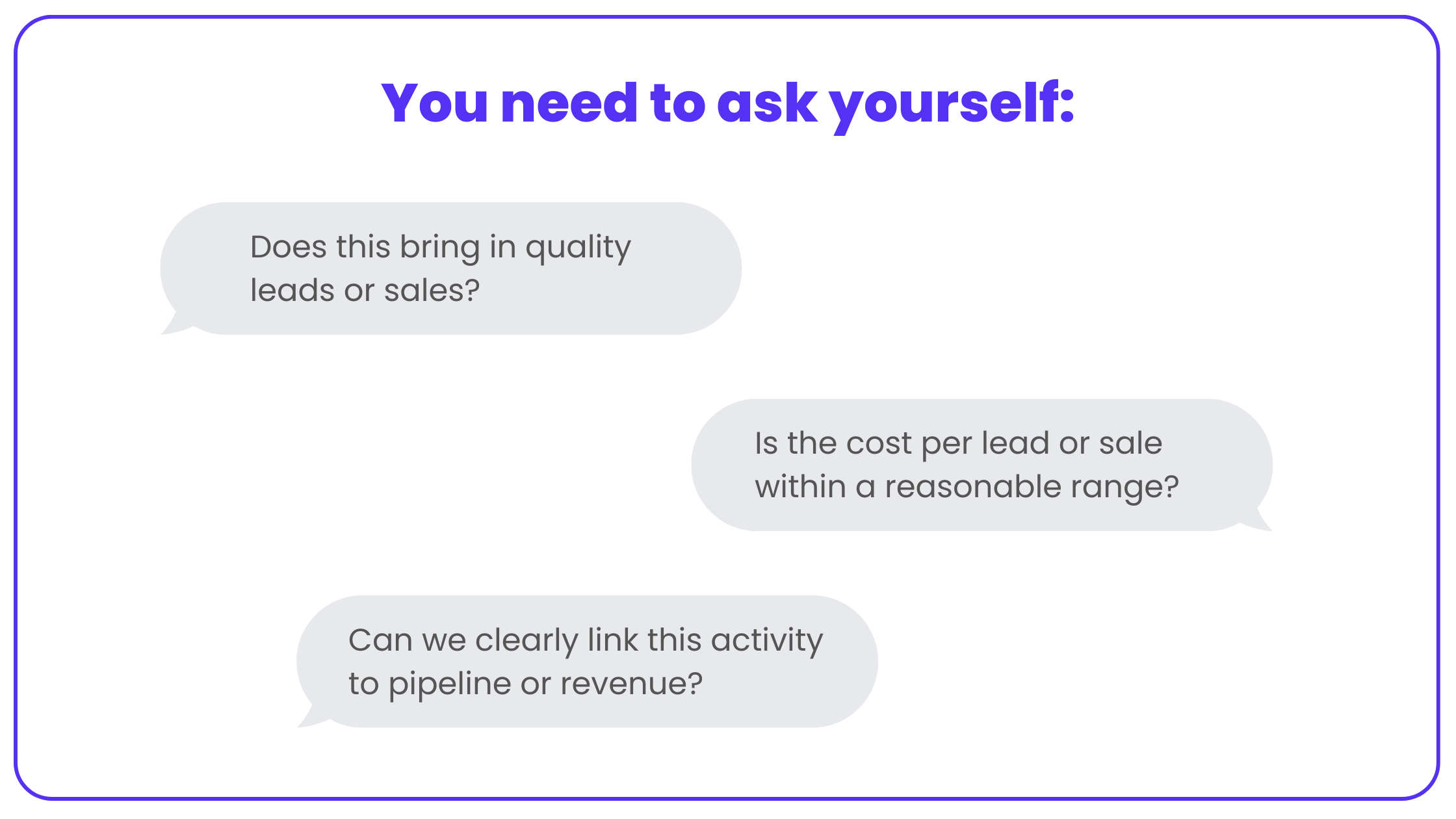
For each channel, ask:
- Does this bring in quality leads or sales?
- Is the cost per lead or sale within a reasonable range?
- Can we clearly link this activity to pipeline or revenue?
Then make firm decisions:
- Reduce or pause low performing channels or campaigns
- Keep, and possibly increase, spend where you have a track record of results
- Test new things only with money saved from underperforming areas
You are not cutting for the sake of cutting. You are removing weak spend so you can fund stronger bets.
#2 Protect the “boring” essentials that quietly drive big returns
When budgets tighten, “maintenance” work is often the first to go. That can be a mistake.
Tasks like web maintenance, SEO clean up, conversion optimisation and CRM hygiene do not always feel exciting. They rarely get big launch presentations. Yet they underpin a lot of the performance you enjoy.
For Australian businesses that rely on search and repeat customers, the following essentials deserve a protected slice of your budget:
- Technical SEO checks and basic fixes a few times a year
- Regular web maintenance, including security updates and improving load speed
- Refreshes of high traffic, high intent website pages
- Regular list cleaning and segmentation in your email platform or CRM
- Tagging and tracking maintenance across your key channels
Research and industry data show that organic search, direct traffic and email often account for a large share of conversions, especially for service based and ecommerce companies. These channels depend heavily on good foundations.
A practical approach for EOFY:
- List the “keep the lights on” tasks that protect your main channels
- Attach rough revenue impact to each based on historic performance
- Ring fence a small share of your budget for these activities, even if you trim elsewhere
You may not win any awards for this work. You will, however, protect the channels that quietly cover a large part of your sales target.
#3 Cut low value content and double down on proven topics
Many teams feel they must publish constantly to stay visible. That pressure often leads to rushed, shallow pieces that do little for traffic or sales. A better approach is to narrow your focus.
Start by reviewing your analytics from the last 12 to 18 months. Identify:
- Articles and pages that attracted steady organic traffic
- Topics that regularly feature in enquiries and sales conversations
- Content that drove form fills, calls or online purchases
Group these into 4 to 6 core themes. These should match real customer problems, not just internal ideas.
Then, instead of spreading your budget across dozens of new topics, invest in:
- Deeper, updated guides on those themes
- Supporting pieces that answer related questions
- Strong internal linking between all assets on each topic
You will publish less often, but each piece will have a clearer purpose and a better chance of ranking, converting and supporting sales.
#4 Automate simple journeys before buying more tools
The marketing technology market is crowded. New platforms promise better insights, smoother personalisation and higher conversion rates. It can be tempting to spend limited budget on more tools.
Before you renew or add anything, ask a harder question.
Are we using what we already pay for?
Many Australian businesses have underused features in their existing CRM or email tools. Even simple automation can deliver strong returns if you set it up properly.
Focus first on a few key journeys:
- Welcome or enquiry sequence
- Abandoned cart or incomplete enquiry follow up
- Re engagement for inactive customers or subscribers
- Simple post purchase or post service check in
These flows:
- Run in the background once set up
- Improve response times
- Keep your brand in front of customers at relevant moments
They also give your team more time. Manual follow up drops, which reduces labour cost and error.
For EOFY:
- Review your top three or four customer journeys
- Document the current steps and delays
- Decide where an automated email or SMS would help
- Implement those flows using your current tools before buying anything new
At Digital Freak, we see a lot of gains from this work, particularly for ecommerce, trade, healthcare and service businesses that rely on repeat custom.
#5 Clean your data so you stop paying for waste
Data quality might sound dry, but it has a real cash impact.
Poor data can cause:
- Overlapping audiences in ad platforms, which leads to higher costs
- Out of date or duplicate records in your CRM, which inflates list charges
- Weak segmentation, which lowers response rates and return
For example, if your email tool charges by contact volume, paying to store and email thousands of inactive, duplicate or low value records erodes your budget every month.
A focused EOFY clean up can include:
- Removing hard bounces, spam reports and long term inactive contacts
- Merging duplicates and correcting obvious errors
- Standardising key fields like industry, region or product interest
- Reviewing list structure and segments
You can also use this as a chance to define what a “good lead” looks like in your database. That makes future targeting and sales handover more effective. Once your data is in better shape, every campaign becomes more efficient. You reach more of the right people with less waste.
#6 Use testing to improve results before you raise spend
Many businesses jump straight to “we need more budget” when they see weak results. Sometimes that is valid. Often, the real issue is low efficiency.
Testing helps you fix that.
You do not need complex multivariate experiments. Simple, structured tests can lift performance with modest effort.
For example:
- On landing pages: Test headlines, key benefit statements, form length and call to action wording
- In emails: Test subject lines, preview text, send times and button text
- In ads: Test creative concepts, offers and calls to action first, then refine audience settings
You can follow a straightforward process:
- Choose one channel and one clear metric to improve.
- Set a baseline using recent performance.
- Plan one change at a time.
- Run the test for a set period, long enough to reach meaningful numbers.
- Keep what works. Discard what does not.
Studies from major platforms and independent analysts often show that even small gains in click through rate or conversion rate can have a large effect on overall return when you compound them across campaigns.
For EOFY 2026:
- Pick one or two key journeys to optimise before you ask for more media spend
- Use test results in your budget conversation to show that you are improving efficiency, not just asking for more money
Digital Freak builds testing roadmaps for clients who feel stuck. It turns “we have tried everything” into a series of manageable experiments.
#7 Reallocate “vanity” spend to revenue linked activity
Many businesses spend a quiet slice of budget on activity that looks impressive but does not clearly drive leads or sales. Common examples include award entries, broad sponsorships, glossy brand videos and low intent social content that gains likes but few enquiries or sales.
Start by listing all your marketing activity for the past year, with rough costs. Next to each item, write what you can confidently link to it: leads, sales, enquiries, or at least meaningful engagement on key pages. If you struggle to connect an activity to pipeline or revenue, mark it as “unclear impact”.
You do not need to cut everything in that column. Instead, aim to reassign a portion of this “vanity” spend to proven channels. For instance, take 20 to 30% of low performing sponsorship or broad awareness budgets and move it into high intent search, remarketing, email, or conversion work on key pages.
Review performance after three to six months. If the reallocated budget delivers better cost per lead or sale, gradually shift more. This steady, evidence based rebalancing stretches your marketing budget without sudden shocks to brand presence.
#8 Consider a hybrid marketing model for skills and execution
Staffing decisions have a major impact on your marketing budget. Hiring a full time marketer with on costs, tools and training can easily reach well into six figures in Australia. At the same time, relying fully on external help can make internal alignment harder.
A hybrid model often stretches budget furthest.
That usually looks like:
- A small in house team focused on brand, stakeholders, decisions and internal knowledge
- An external agency handling specialist work such as SEO, paid media, content production, email and analytics
This structure can:
- Reduce the need for several specialised full time roles
- Give you access to a broader skills mix within a set retainer
- Create flexibility to increase or decrease activity without redundancies
For example, instead of hiring both a marketing manager and a digital specialist, you might:
- Hire or retain one marketing coordinator or manager to manage priorities and approvals
- Engage an agency such as Digital Freak on a fixed retainer to handle technical and execution heavy tasks
During EOFY planning, you can model a few staffing and agency scenarios:
- Full internal team
- Mainly agency
- Hybrid structure
Compare each on:
- Cost per year
- Skills covered
- Risk and flexibility
- Realistic output
In many Australian SMEs, the hybrid option offers the best blend of control and capability for the budget available.
Stretch Your Budget Further with Digital Freak
If you want your 2026–27 marketing budget to work harder, you do not have to do it alone. Digital Freak partners with Australian businesses as a full outsourced marketing team or as extra muscle for in house marketers. Our specialists cover strategy, SEO, paid ads, content, email, automation and reporting. Let us identify your quickest wins and biggest opportunities. Book a free strategy call today.
FAQs
How should I start reviewing my marketing spend at EOFY 2026?
Begin with a simple 12-month view: channel, cost, leads, sales and cost per lead or sale. Highlight what clearly works and what does not. Digital Freak can run this audit with you and identify quick wins and wasted spend. If you want a clear picture before budgeting, book a free strategy call.
How can I get more value from marketing channels that already work?
Double down on what performs. Improve landing pages, refine targeting, test ad creative and add simple follow up flows. Often, small tweaks beat big new projects. Digital Freak focuses on optimisation before expansion, so your best channels deliver even stronger results. If you want a prioritised action list, get your free strategy call.
How can ad testing improve ROI without increasing spend?
Ad testing helps you earn more clicks and conversions from the same budget. You experiment with headlines, images, calls to action, audiences and landing pages, then keep the winners and pause weak variants. Over time, your average performance rises. Digital Freak designs structured test plans and reporting. If you want smarter ad spend, chat with Digital Freak today.
What is a hybrid marketing model, and how does it save money?
A hybrid model uses a small in‑house team for brand and stakeholders, plus an agency for specialist tasks such as SEO, ads, content and automation. You cover more skills without several full‑time hires. Digital Freak often works this way with Australian businesses. If you want to find out more about a hybrid setup, call us today.

When clients work with me, they get exactly what they want - no-nonsense, authentic digital marketing that works! With my industry experience, eye for detail, and a team that goes the extra mile, every client gets the personalised, expert treatment they deserve. Let’s get you online – and growing!