
Something strange happens to Australian e-commerce businesses in October and November. The leads keep coming, the traffic looks healthy, the enquiries land in the inbox, and then everything just… hovers. Carts get filled and abandoned. Quotes get opened four times and never signed. It’s not because it’s the spooky season. It’s something else. It’s the 6 words that make every business owner’s eye twitch “I’ll just wait for Black Friday.”
Black Friday lands on 27 November this year. If you’re sitting on your hands until then, you’ve effectively volunteered to run a business for 11 months instead of 12. That’s a big call for a small or medium business with overheads that don’t take a month off.
The other good news is that the stall isn’t really about price. It’s about psychology, and once you understand what’s actually happening in your customer’s head, you can keep the till ringing right through the wait.
Why customers get the yips in November
Understanding the freeze is the first step to breaking it, and it’s got very little to do with your pricing. Here’s what’s really going on behind that “I’ll wait” response.
The anchor gets set early
By late October, your customer has already been trained. Their inbox is full of “early access” emails, their feed is packed with countdown timers, and every second video tells them the real deals are coming. Their brain quietly sets an anchor: Whatever the price is now, it’ll be lower on 27 November.
Here’s the kicker. That anchor doesn’t need evidence. Research on price anchoring consistently shows people latch onto the first number or expectation they encounter and judge everything against it. Your customer has no idea whether you’ll discount at all, but they’ve decided you will, because everyone does.
Loss aversion beats desire
Behavioural economics keeps proving the same point: people feel the pain of losing roughly twice as strongly as they feel the joy of gaining. It’s called loss aversion, and when applied to November, that means the fear of paying $200 too much outweighs the pleasure of owning the thing today. Waiting feels free. Buying feels risky. That’s why “But you could have it now” is such a weak argument. You’re offering a gain. They’re avoiding a loss. Loss wins.
Deal-hunting has become an identity
For a lot of shoppers, scoring a bargain isn’t a financial decision, it’s a personality trait. They want the story. They want to tell their mates they held out and got 30% off. If you take that away, you’re not just taking a discount, you’re taking the win. Smart businesses give customers a way to feel great about their purchase without shredding margin.
Decision deferral is the easy option
When a decision feels hard, people delay it. A looming sale date gives them a socially acceptable excuse to do nothing, and doing nothing is always the path of least resistance. The longer they defer, the colder the intent gets. Plenty of those November “I’ll wait” customers never come back on 27 November at all. They’ve moved on, or they’ve bought from whoever stayed in front of them.
What waiting until 27 November actually costs you
Let’s be blunt about the maths, because “We’ll make it up on the weekend” is a comforting lie.
You compress a month into four days. 6 weeks of demand crammed into one weekend puts pressure on stock, staff, delivery and support. Ask any Aussie retailer who’s tried to explain a late Australia Post delivery in December how that went!
Your ad costs spike exactly when you need them. Auction competition climbs sharply through November across Meta and Google, and CPMs follow. If your first campaign dollar goes in on the 25th, you’re buying at the peak with cold audiences. The businesses that win are the ones who built their retargeting pools and email lists in September and October, when attention was cheap.
You train customers to only buy on sale. Do this for 3 years running and you don’t have customers; you have a discount subscription list. Full-price sales in February become almost impossible.
Cash flow doesn’t care about your campaign calendar. Rent, wages, super and stock deposits all fall due in November whether you sold anything or not.
Margins take the hit… twice. You discount, and you pay more to advertise the discount. A 30% off campaign with inflated ad costs can easily deliver record revenue and worse profit than a normal month. Revenue is vanity. Have a look at the profit line before you celebrate.
5 ways to keep selling through the wait
You don’t need to discount early to keep the tills ringing; you just need to give people a reason to act now rather than later. These 5 tactics help you capture demand throughout November without eating into your Black Friday margins.
1. Make a price-match promise and mean it
The single fastest way to unfreeze a hesitant buyer is to remove the risk of buying too early. A clear, plain-English promise works perfectly:
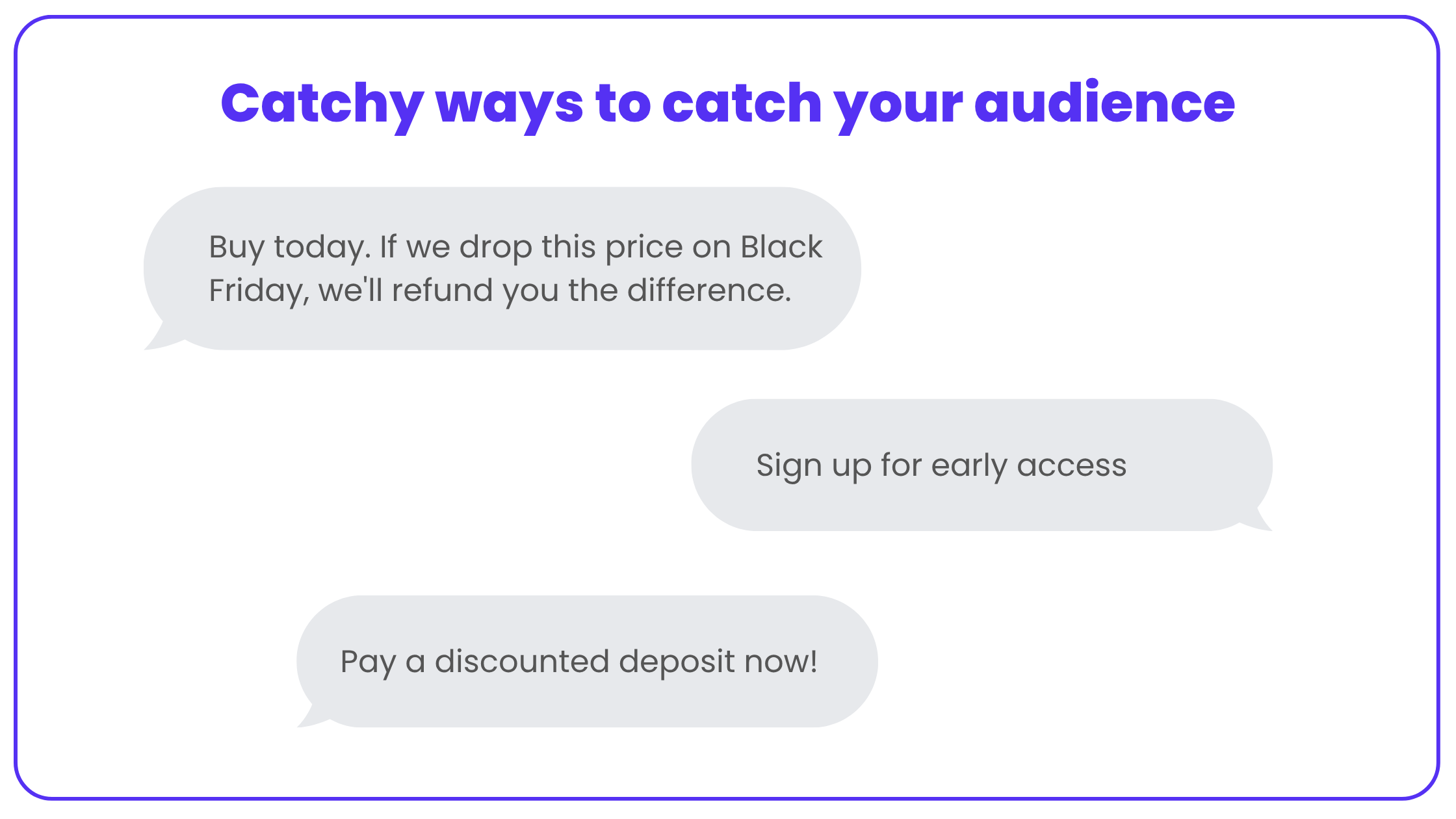
“Buy today. If we drop this price on Black Friday, we’ll refund you the difference.”
That’s it. No fine print gymnastics. You’ve killed loss aversion at the root, because now the customer can’t lose. If the price drops, they get money back. If it doesn’t, they got the product 6 weeks earlier.
Make it practical: set a clear window (usually purchases from 1 November through to the sale), automate the check, and tell people exactly how they’ll claim. Under Australian Consumer Law, whatever you promise becomes a term you must honour, so keep it simple and keep it honest. A vague guarantee that you wriggle out of will cost you far more in bad reviews than you saved in refunds.
The best part? Most eligible customers never claim. Not because you hid it, but because life gets busy. Build the refund cost into your forecast, treat it as a conversion expense, and you’ll still come out ahead.
2. Build early-access tiers that feel genuinely exclusive
Instead of fighting the wait, monetise it. Create a VIP tier where existing customers, email subscribers or loyalty members shop the Black Friday pricing a week or two early.
This works on three levels. It shifts revenue out of the congested weekend, it gives deal-hunters the win they’re craving, and it turns your sale into a list-building machine. “Sign up for early access” is one of the highest-converting opt-in offers you’ll run all year, and those subscribers stay valuable long after November.
Layer it if you can: VIPs get 72 hours, then subscribers, then the public. Scarcity plus status is a powerful combination, and it costs you nothing extra to structure it that way.
3. Sell value instead of cutting price
Not everything needs a percentage sign. When you can’t drop price without gutting margin, add value that costs you less than the discount would:
- Free upgraded shipping or guaranteed pre-Christmas delivery
- Extended warranty or an extra service visit
- Bundles that lift average order value while feeling like a deal
- Bonus product, accessory or add-on session
- Priority onboarding or a booked-in start date
For service businesses this is where the real money sits. A web design studio, a dentist, a trades business or a physio can’t do 40% off, but they can lock in current rates for work booked before Christmas or throw in an extra month of support. The customer gets certainty; you get signed contracts in November.
4. Take deposits and lock in pricing
If your sales cycle runs longer than a few days, use it. Offer a small refundable deposit that holds today’s price and secures a January or February start. You get committed pipeline, predictable cash flow and a diary that’s already full when your competitors are cold calling in the new year.
We’re conditioned to lock in prices. It’s the same instinct behind fixing a home loan rate. Give them that feeling and hesitation drops fast.
5. Start the campaign in October, not on the 27th
Your Black Friday campaign shouldn’t begin on Black Friday. It should begin six to eight weeks out, when you’re building the audiences you’ll retarget later. The businesses posting monster Black Friday numbers aren’t lucky. They just did the boring work in October while everyone else was arguing about the discount percentage.
The best part is that ads cost less before Black Friday, so you can optimise on that and double-down on your best-performing ad. Another way to make your ad spend more affordable is to do web maintenance!
Measure the right things
Track revenue for the full November to December period, not just the sale weekend. Watch blended profit margin, customer acquisition cost, email list growth, and how much of your December revenue came from customers you captured in early November. If your sale weekend spikes but your quarter looks flat, you didn’t create demand. You just moved it and paid a discount for the privilege.
The short version
Customers aren’t waiting because your price is wrong. They’re waiting because waiting feels safe. Remove the risk with a price-match promise, hand the keen ones an early-access door, add value where you can’t cut price, and start the campaign weeks before the date on the calendar.
Do that, and 27 November becomes the peak of a very good two months, not the only day you sold anything.
Let’s get your Black Friday sorted before the rush hits. Book a free strategy call with Digital Freak’s director! We’re the marketing agency in Melbourne where small and medium businesses across Australia get proper campaign support at a price that won’t make your accountant cry.
FAQs
When should I actually start my Black Friday campaign?
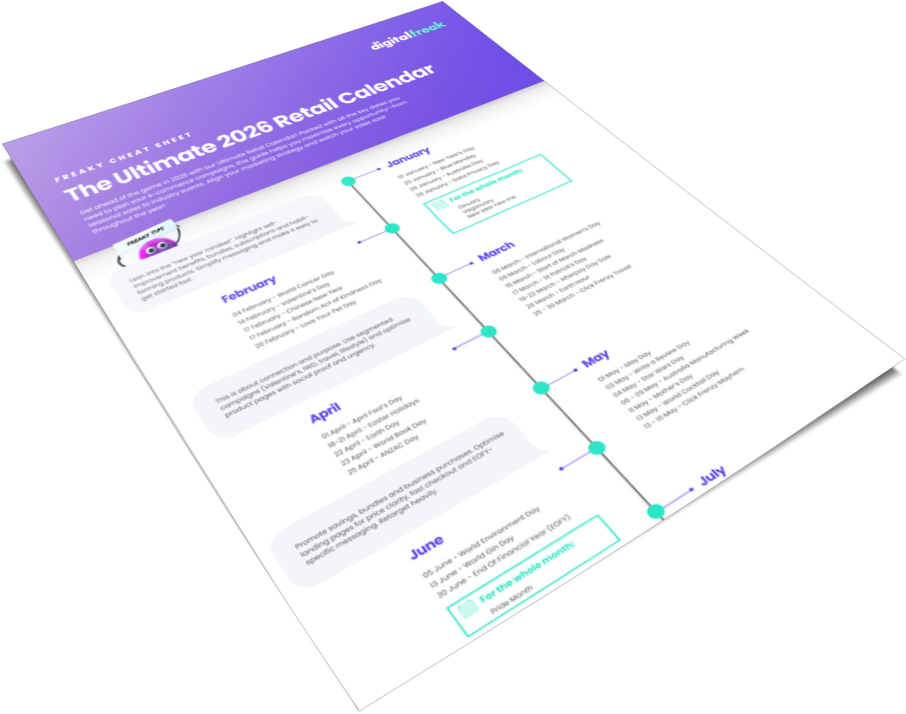
6-8 weeks out. Get a free campaign cheat sheet here! Use early October for content and top-of-funnel ads, late October for waitlist sign-ups, and November for warming your retargeting pools. By the time 27 November lands, you’re selling to a warm audience instead of buying cold clicks at peak prices. Not sure where to start? Book your free strategy call with our director.
How do I stop customers only buying when things are on sale?
Limit how often you discount and make your sale feel like an event rather than a habit. Between sales, sell on value: faster delivery, better service, stronger guarantees. Strong brand development does the heavy lifting here, which is exactly why we treat brand and messaging as revenue drivers, not decoration. If you want some affordable advice, book a free consult with our director!
My ad costs jump every November. What can I do?
Run website maintenance and build your audiences early when attention is cheap. Retargeting warm traffic in late November costs far less than chasing cold reach at peak CPMs. Tighten your creative, exclude converters, and shift budget towards email. We manage Google and social ads as well as web maintenance affordably for small and medium Aussie businesses through exactly this crunch.

When clients work with me, they get exactly what they want - no-nonsense, authentic digital marketing that works! With my industry experience, eye for detail, and a team that goes the extra mile, every client gets the personalised, expert treatment they deserve. Let’s get you online – and growing!