
Every year, around mid-October, we get the same phone call. A business owner rings up, slightly panicked, wondering why their Google Ads costs have doubled overnight. Nothing’s changed on their end. Same campaigns, same keywords, same budget. But suddenly their cost per click has jumped from $2.40 to $5.80 and their conversions have gone quiet.
Welcome to peak season, friend. You’ve just walked into a bidding war.
Here’s the thing though: this isn’t a glitch, and your agency hasn’t broken anything. It’s simply how ad platforms work. Once you understand the mechanics behind it, you can plan for it, budget for it, and in some cases, use it to your advantage while your competitors panic and pull their budgets.
Let’s get into it.
Ad platforms are auctions, not price lists
The single biggest misunderstanding we come across is the idea that Google or Meta charge a set rate for clicks. They don’t. There’s no rate card. Nobody at Google decided that “plumber Melbourne” costs $18 a click.
What actually happens is an auction, and it runs every single time someone types a search into Google or scrolls past a spot in their Instagram feed. Billions of these auctions happen daily, and they resolve in milliseconds.
When someone searches “gift hampers Sydney”, Google looks at every advertiser bidding on that term or something close to it. It then works out who gets shown, in what order, and what each advertiser pays. The winner isn’t simply whoever throws the most money at it, which is the good news for smaller businesses.
Google calculates something called Ad Rank, which combines your bid with your Quality Score and a few other factors like expected click-through rate, ad relevance, landing page experience, and the context of the search. Your position depends on that whole package, not just your wallet.
The really interesting part is what you actually pay. Under the second-price auction model that underpins most of this, you generally pay just enough to beat the advertiser directly below you, not your full maximum bid. So if you bid $8 and the next advertiser’s effective position requires $4.20 to beat, you pay roughly $4.21. Your maximum bid is a ceiling, not a price tag.
Meta runs on similar logic, though it weighs things differently. Meta’s auction considers your bid, estimated action rates (how likely it thinks a given user is to do what you want), and ad quality. Meta’s system is trying to maximise total value for users and advertisers, not just revenue, which is why a well-crafted ad with strong engagement can outperform a bigger budget with a dull creative.
Both platforms are essentially running a continuous popularity contest where relevance and money both count.
So why does everything get expensive in November?
Now we get to the fun bit. If the auction mechanics stay the same all year, why does your CPC climb a cliff during Black Friday, Christmas, or end of financial year?
Because the number of bidders changes, and so does the intensity of their bidding.
Think of it like the Melbourne rental market. The property hasn’t improved. There are just forty people at the inspection instead of four. Same house, wildly different outcome.
Here’s what’s happening under the bonnet during peak season:
More advertisers enter the auction. Businesses that run ads sporadically throughout the year suddenly switch everything on for Q4. Retailers who’ve been dormant since July come roaring back. Your auction went from eight competitors to twenty-five.
Existing advertisers raise their bids. Everyone knows conversion rates lift during peak season, so everyone’s willing to pay more per click. When your competitor’s willing to pay $9 instead of $5 because their conversion rate doubled, the whole auction floor rises.
Big budgets flood in. The large national retailers and international brands have peak season war chests. They’re not bidding carefully; they’re bidding to dominate. Their presence drags the entire cost structure upward for everyone in the category.
Automated bidding compounds it. Most advertisers now run Smart Bidding or similar automated strategies. These systems detect rising conversion rates and respond by bidding more aggressively. Thousands of algorithms simultaneously deciding to bid harder creates a feedback loop that pushes costs up faster than human bidding ever did.
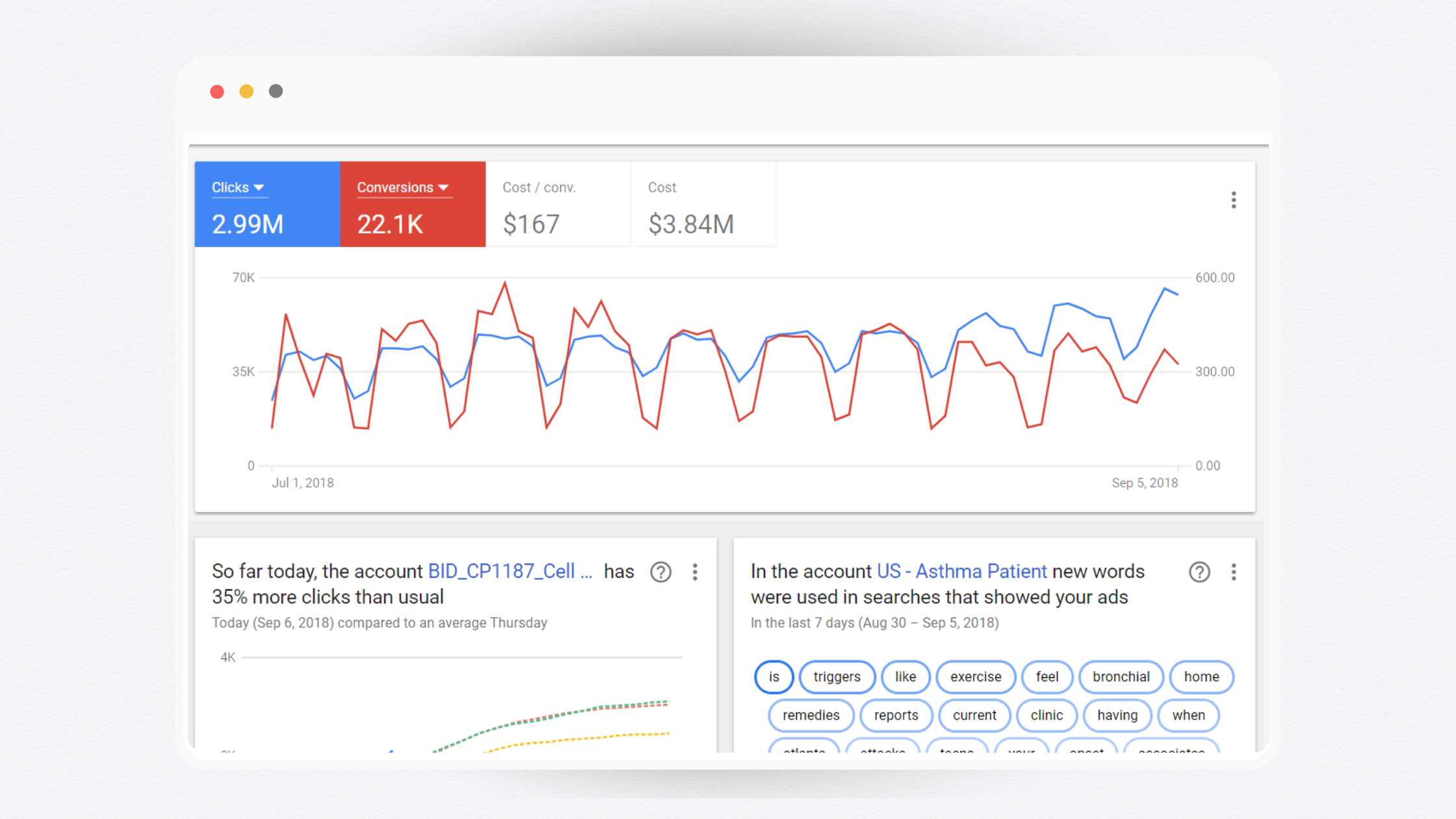
The numbers back this up. Industry data consistently shows CPCs climbing meaningfully across retail and ecommerce categories through November and December, with the sharpest spikes clustered around Black Friday and Cyber Monday. Some retail subcategories see costs rise 30 to 50 per cent or more compared with their October baseline. Australian businesses face an extra wrinkle: our peak retail season collides with summer holidays, so the crunch period runs from Black Friday straight through Boxing Day sales and into January.
And it’s not just Christmas. Australian businesses see their own seasonal spikes at different times. Accountants and financial services get hammered in May and June around EOFY. Fitness businesses face a brutal January. Trades and home services see costs climb through spring as renovation season kicks off. Education providers battle it out before each semester.
Whatever your industry, you’ve got a peak. Find it.
How to survive the bidding war
Right, enough doom. Let’s talk strategy, because the businesses that do well during peak season aren’t the ones with the biggest budgets. They’re the ones who prepared.
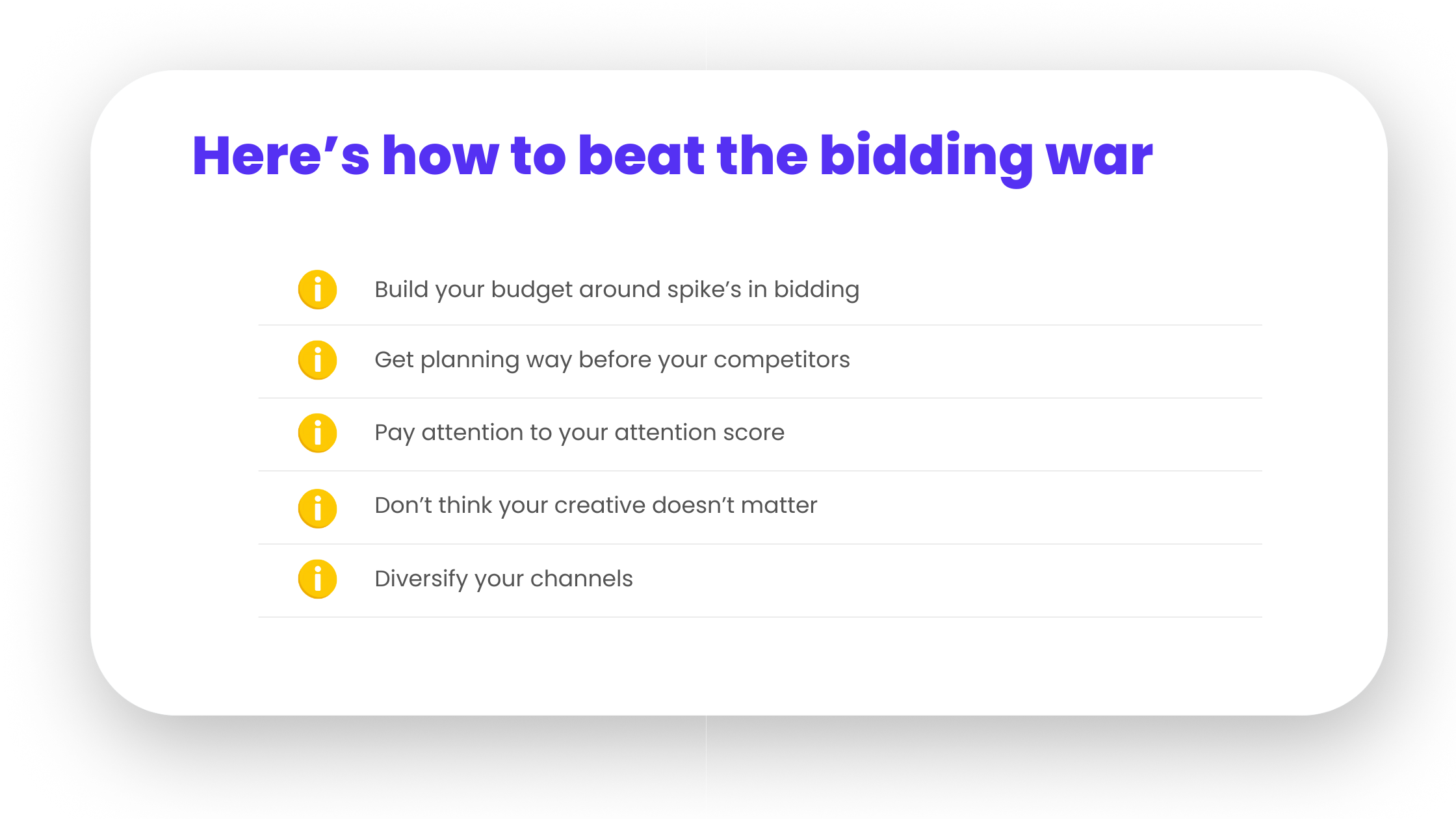
Build your budget around the spike, not against it. This is the mistake we see most often. A business sets a flat monthly budget in January and never revisits it. Then peak season hits, costs rise, and their budget buys half as many clicks right when demand is highest. Plan a seasonal budget from the start. Pull back slightly during quiet months and redirect that money into your peak. Same annual spend, dramatically better outcome.
Start earlier than everyone else. Shoppers begin researching Christmas purchases well before they buy. If you start running ads in early October when CPCs are still reasonable, you can capture that research traffic cheaply, build remarketing audiences, and then convert those warm audiences in November and December at a fraction of what cold traffic costs. This is genuinely one of the highest-leverage moves available to a small business.
Improve your Quality Score before the rush. Because your bid is only part of Ad Rank, a strong Quality Score effectively lowers what you pay for the same position. Tighten your ad groups, write ad copy that mirrors your keywords, fix your landing page load speed, and make sure your page delivers exactly what your ad promised. Do this work in September, not the week before Black Friday.
Go long tail. “Gifts for mum” is a bloodbath. “Handmade ceramic mug set Melbourne” is not. Long tail keywords carry lower search volume but far less competition, better intent, and much healthier cost per acquisition. Build out a long tail layer in your account and let the big brands fight over the head terms.
Feed your remarketing audiences all year. The cheapest peak season traffic is traffic you already paid for months ago. Run affordable awareness campaigns through quiet periods, build proper audience lists, and you’ll head into peak season with warm audiences ready to convert.
Let your creative do the heavy lifting. On Meta especially, ad quality directly affects your costs. A scroll-stopping video or a genuinely funny piece of creative can deliver better results than a competitor spending three times your budget on something forgettable. Refresh your creative before peak season, and have variations ready because creative fatigue accelerates when frequency climbs.
Diversify your channels. If Google Search is priced out of reach, look at where your competitors aren’t. Email marketing costs you almost nothing per send. Organic social, SEO, YouTube, Pinterest, and Performance Max all have different competitive dynamics. Spreading your presence reduces your exposure to any one auction.
Watch the shoulders. The week before the rush and the week after often deliver excellent value. Early December and the first half of January can be quietly brilliant for businesses willing to run when everyone else has stopped.
The bottom line
Peak season costs more because more people want the same attention at the same moment. That’s not unfair, it’s just an auction doing its job.
The businesses that thrive are the ones who see it coming, prepare properly, and stay in the game when their competitors flinch. Understanding the auction is step one. Planning around it is what actually makes the money.
Need a hand getting your campaigns peak-season ready? That’s very much our thing.
FAQs
Why did my Google Ads CPC suddenly double in November?
Nothing’s broken, we promise. Every competitor who’s been asleep since winter just switched their ads back on, and the big brands rolled out their Christmas budgets. Same auction, triple the bidders. Jump into your account, compare November’s CPC against October’s, and note the percentage jump. Save that figure somewhere. Next year it becomes your planning baseline instead of an unpleasant surprise! Not sure whether your costs are seasonal or something’s genuinely wrong? Book a free strategy call with our Melbourne agency and we’ll tell you straight.
Do I just need to bid more during peak season?
Don’t lead with that! Google decides your position using Ad Rank, which is your bid plus relevance, so a tidier account can beat a bigger budget. Before you touch bids, check your Quality Score column, split any ad group holding more than ten keywords, and test your landing page speed. Then lift bids only on the keywords already converting. That order matters. Before you throw more money at it, let our Melbourne team check what’s actually holding your Ad Rank back. Grab a free strategy call.
When should I start my Christmas campaigns in Australia?
Early October, while clicks are still sensibly priced. People research for weeks before they buy, so collect them cheaply now and sell to them later. Practically: switch on a low-budget awareness campaign, make sure your remarketing tags are firing properly, then build audiences of anyone who viewed a product or landed on a key page. Come November, you’re retargeting warm people instead of paying peak rates for strangers. Book a free strategy call with our Melbourne team and let’s get you peak-season ready!
Should I pause my ads when costs get too high?
Tempting, but it almost always backfires! Pausing wipes your momentum, restarts the learning phase, and gifts your traffic to whoever held their nerve. Instead, trim the expensive head terms, keep your best-performing long tail and remarketing campaigns running, and drop your daily budget by twenty or thirty per cent rather than hitting zero. Staying visible at a smaller scale beats disappearing completely and rebuilding in January. Thinking of switching everything off? Talk to us first in a free strategy call. Our Melbourne agency will show you what to trim and what to protect.

When clients work with me, they get exactly what they want - no-nonsense, authentic digital marketing that works! With my industry experience, eye for detail, and a team that goes the extra mile, every client gets the personalised, expert treatment they deserve. Let’s get you online – and growing!