
All of us have sat at our desks with a list of marketing tasks that feels as long as a rush hour queue of traffic (and about as much fun too!). Whether you’re a small business owner or marketing manager, you’ve seen the giants of your industry appearing in every Google search, popping up on every Instagram feed, and landing in every inbox. It feels like you need to be everywhere at once to stand a chance. Then you look at your budget. You have about $1,000 to spend this month. It’s certainly not nothing, but in terms of competing online, it feels like it’s hardly going to make a ripple, never mind a splash.
The common reaction to this pressure is something we call the spray and pray approach. Business owners take that $1,000 and spread it paper-thin across five different platforms. They put a bit into Facebook, a bit into Google, a bit into a local directory, and maybe a few hundred into a flyer. By the end of the month, the money is gone. They might have a few more followers or a handful of clicks, but sales and leads have hardly moved and they’re exhausted from trying to manage it all. That money has been effective at nothing because they tried to do everything.
What if that $1,000 could feel like $10,000? And even better; if it WORKS like $10,000? It’s not a magic trick or a secret algorithm. It’s precision. If you stop trying to reach everyone and focus entirely on the people who are ready to buy right now, your small budget becomes very effective.
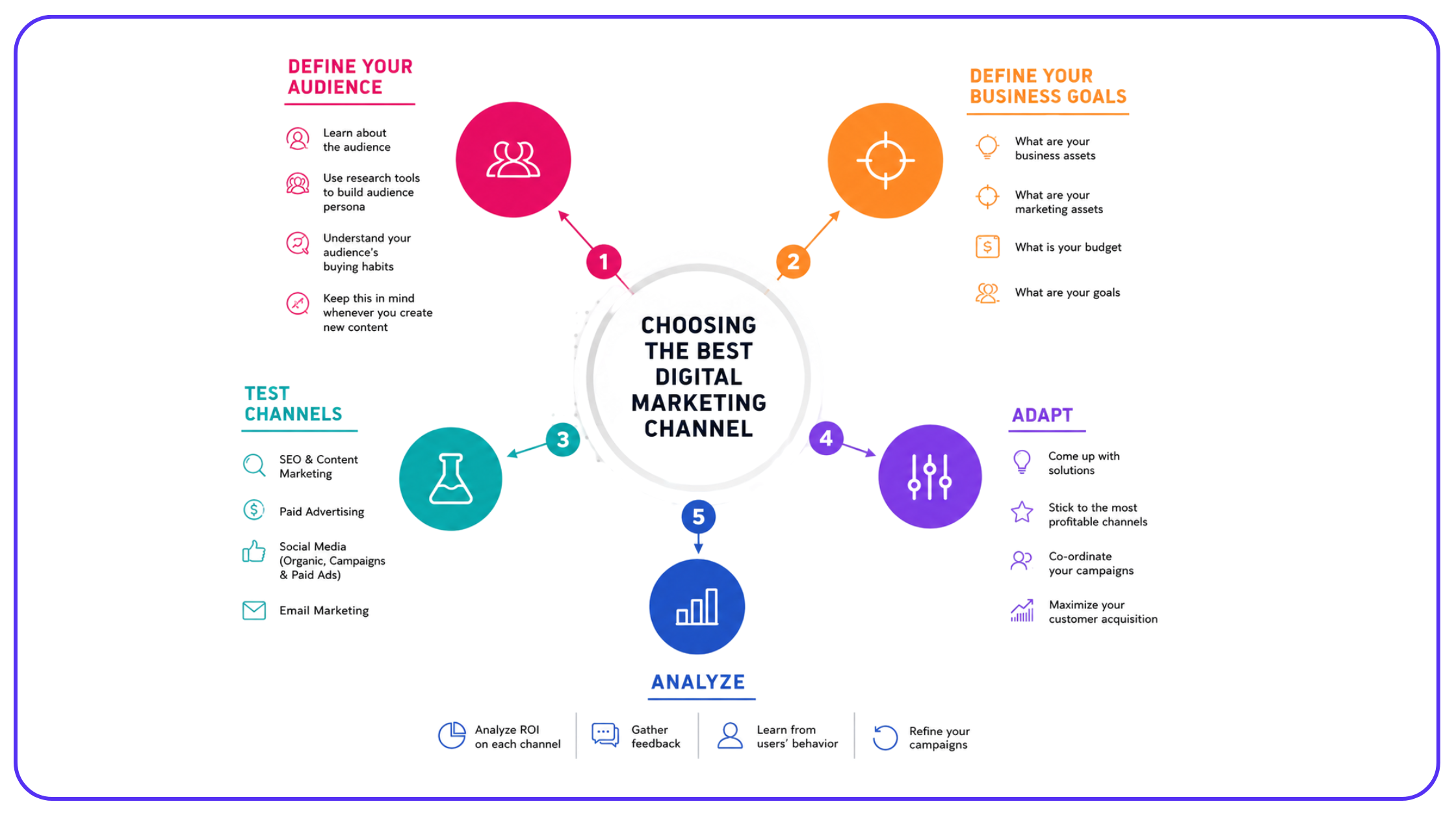
The Myth of Being Everywhere
There is an idea in digital marketing that brand awareness is the most important goal for a small business. People tell you that you need to stay top of mind. While that works for brands like Coca-Cola or Nike, they have millions of dollars to burn on people who might not buy a drink or a shoe for another three months. You don’t have that luxury.
When you have a limited budget, brand awareness is a secondary benefit, not the primary goal. Your goal is making sales. You need a return on your investment today so that you have two thousand dollars to spend next month. Spreading your budget across multiple channels dilutes your impact. You end up with ads that don’t run often enough to gather data and content that does not reach enough people to build momentum.
High Intent vs Low Intent
To make your money work harder, it’s all about the difference between high-intent and low-intent channels.
Imagine you own a landscaping business in Melbourne. A low-intent channel is something like an Instagram feed. People are there to look at photos of their friends, watch a funny video, or find inspiration for their next holiday. They might see your beautiful garden design and give it a like. They might even follow you. However, they are not necessarily looking to hire a landscaper today. They are passive. To win a client here, you have to catch them at the exact right moment or stay in front of them for months until they finally decide to renovate. That is an expensive game to play with a small budget.
Now, consider a high-intent channel like Google Ads. When someone types “landscaper in Melbourne” into that search bar, they have a problem. They are actively looking for a solution. They have their wallet out, figuratively speaking. This is a high-intent moment. If your $1,000 makes your name is the first one they see when they are in that mindset, your chance of a sale is significantly higher.
By ignoring the passive scrollers and focusing on the active searchers, you stop wasting money on people who are just window shopping.
Finding Your Current Wins
Before you spend a single cent of your next marketing budget, look at where your business is coming from right now. Many business owners skip this step because they want to find something new and exciting, and a lot of marketing agencies love this because they get to sell you more! But the clues to your growth are usually hidden in your current success.
Ask yourself where your last 10 clients came from. If 7 of them were word-of-mouth referrals, that tells you something important. Your current “winning” channel is reputation and trust.
If you are winning through word of mouth, the next logical step is not necessarily a flashy TikTok campaign. Instead, look for the digital version of word of mouth. This might be LinkedIn, where you can share your expertise with a professional network. It might be a focused email strategy to get your clients to give you more Google Reviews. If people already trust what others say about you, use your budget to amplify those voices.
If most of your business comes from people finding your website through a random search, your next logical step is to increase the volume of that traffic. Use your budget to bid on the specific keywords that lead to those enquiries.
The Leaky Bucket Problem
One of the quickest ways to make a $10,000 feel like $10 is to send high-quality traffic to a poor-quality website.
Imagine you spend your entire budget on a perfectly crafted Google Ads campaign. The ads are brilliant. The targeting is spot on. People click through in droves. But when they arrive at your site, the phone number is hard to find, the images are blurry, and they don’t really know what services or products you offer. It makes your business look… well, dodgy. So, they leave within three seconds.
You have just paid for a crowd of people to walk into your shop, see a mess, and walk back out.
Sometimes, the most high-value use of a marketing budget is not actually marketing at all. It’s web development and web maintenance. Updating your website to ensure it is fast, mobile-friendly, and has a clear call to action can do more for your bottom line than any ad campaign. A website that converts 5% of its visitors is twice as valuable as one that converts 2.5%. Improving your site effectively doubles your future marketing budget without you having to spend an extra cent on ads.
Choosing Your One Big Thing
If you have a limited budget, have the courage to pick one channel and do it properly.
If you choose Google Ads, don’t just set them and forget them. Spend the time to refine your negative keyword list so you aren’t paying for irrelevant clicks. Expand your campaigns for specific solutions or products. Write three different versions of your ad copy to see which one works best with your target audience.
If you choose content writing, don’t just post once a month about “Company News” or spam people with AI copy-paste slop. Write deep, helpful articles that answer the exact questions your customers ask you during sales calls. One high-quality, educational piece of content can stay at the top of search results for years, bringing in leads long after you have paid for it.
When you focus your budget on one area, you gain the ability to dominate that space. It is better to be the king of one small hill than a peasant in five different kingdoms.
The Power of Natural Progression
Marketing should feel like a natural extension of how you already sell. If you are a person who loves a chat and builds rapport easily, your digital marketing should reflect that. Maybe a conversational email newsletter or a proactive LinkedIn presence is your best fit.
If your product is highly visual and people need to see it to understand the value, then focusing on your brand development, video ads, and social imagery is the logical path.
The goal is to find the path of least resistance between you and your customer. Don’t try to force a marketing strategy that feels alien to you or your business model. If your business relies on high-value B2B relationships, trying to rank for generic search terms on Google might be a long and expensive road. You probably find that your best leads come from professional referrals and industry networking. The logical digital step is to amplify your personal reputation on LinkedIn, expand onto Facebook groups, or invest in LinkedIn ads.
The Math of Success
Let us look at how the numbers change when you shift from “spray and pray” to a “high-intent” strategy.
In the “spray and pray” scenario, you spend $200 on five different platforms. Because you’ve spread yourself thin, you might get 100 clicks from each, totalling 500 clicks. But because the intent is low and your messaging is generic, only 0.5% of those people turn into a lead. That gives you 2.5 leads. Like Samwise said, you’re like too little butter spread on too much bread. Yes, we’re Lord of the Rings nerds.
In the focused scenario, you put all $1,000 into one high-intent channel, like Google Ads for your specific service. Because you are focused, you can bid on better keywords and write better ads. You might get fewer clicks overall, say 300. But because these people are actively looking for you, your conversion rate jumps to 5%. Now you have 15 leads.
The budget was the same. The difference was the strategy. You stopped chasing everyone and started standing in front of the people who were already looking for you.

Quality and Targeting Beats Quantity Every Time!
In the digital world, noise is everywhere. Most people are trying to shout louder than their competitors. But shouting is expensive and exhausting.
By prioritising high-intent channels, you don’t have to shout. You just have to be in the right place at the right time. When you focus your energy, your $1,000 stops being a small amount of money spread over a large area. It becomes a sharp, effective tool used to clear the path to your next customer.
Small businesses have a unique advantage. You are agile. You can change your strategy in a day while the big corporations take months to approve a single ad. Use that speed. Focus your budget. Pick the right channel. When you stop trying to do everything, you finally give yourself the chance to be brilliant at one thing. And in marketing, being brilliant at one thing is always more profitable than being mediocre at ten.
At Digital Freak, we understand the juggle because we’re a small business too! We know you don’t have time for strategies that lead nowhere or the money to be upsold on services that you don’t need. If you want to find your most logical next step and do it brilliantly, we’re here to chat. Book a free strategy call with our director, Karyn, today!
FAQs
Should I spend more on Google Ads or Social Media?
Think about your customer’s mindset. Are they actively searching for a fix, or are they just browsing? Google captures the “I need this now” crowd. Social media is better for building a vibe and staying familiar. We help you choose the path that actually pays the bills. Get a free strategy call with our awesome founder today.
How do I know if my marketing is actually working?
Forget about “likes” or “follows” because they don’t pay the rent. You should see more phone calls, more enquiries, and more money in the bank. We provide clear updates so you can see the real-world impact of your spend. Digital Freak keeps things transparent. Chat with us today on a free strategy call.
My business is very local, so do I still need a big digital strategy?
You don’t need a big, expensive strategy, but you do need a smart one. Local SEO and Google Ads are usually the best bet, as they make sure you’re the first person people see when they search for services in your specific area. We help you dominate your local patch without wasting money on people across the country. Speak with Karyn about local growth on a free call.
Should I spend more on online ads or my website first?
Think of your website as your shopfront and ads as the sign on the main road. If you pay to lead people to your door but the shop is a mess inside, they’re going to think your business is dodgy and will leave immediately. We usually suggest getting your website right first to ensure you actually convert the traffic you pay for. Digital Freak builds websites that turn browsers into buyers, so your ad spend doesn’t go to waste. Chat with Karyn on a free strategy call to see which one needs your attention first.

When clients work with me, they get exactly what they want - no-nonsense, authentic digital marketing that works! With my industry experience, eye for detail, and a team that goes the extra mile, every client gets the personalised, expert treatment they deserve. Let’s get you online – and growing!