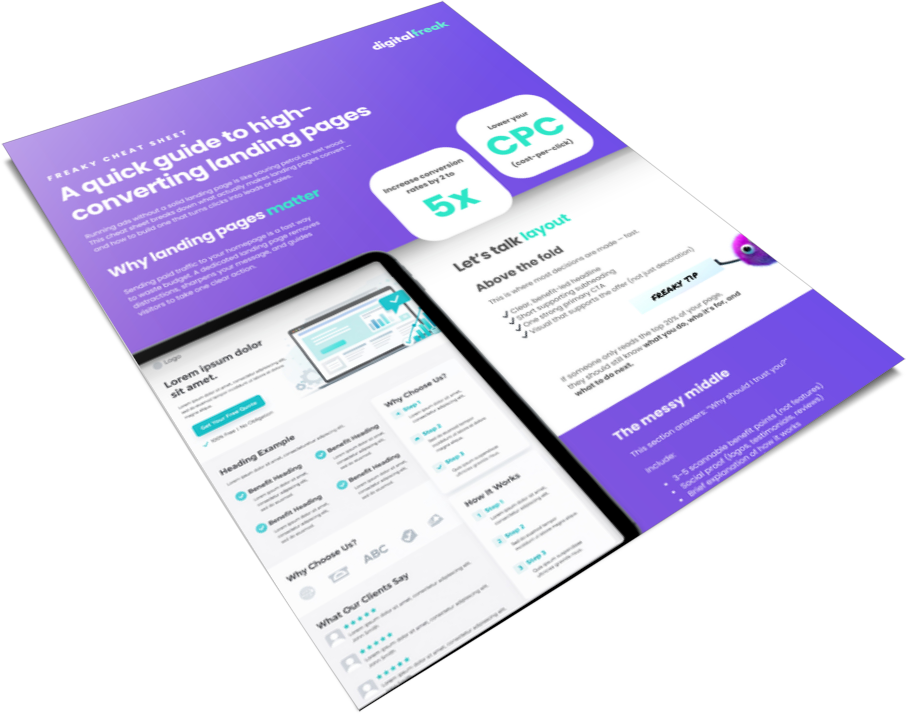

Your product landing page is where curiosity meets decision. It is where people learn why your product matters and decide whether to take the next step. A great landing page can capture attention, build trust, and motivate visitors to act.
But creating one that works takes planning. It is about more than attractive design or catchy headlines. You need to think about who you are talking to, what they need, and how to guide them through the page with clarity and purpose.
Let’s walk through how to design a product landing page as part of your content strategy that feels natural, tells a clear story, and inspires action.
1. What a Product Landing Page Is and Why It Matters
A product landing page has one clear job: to get visitors to act. That action might be buying a product, starting a free trial, or signing up for early access. Everything on the page should push gently but confidently toward that goal.
Unlike a homepage, which introduces your brand as a whole, a landing page focuses on one product or offer. Studies show that pages with a single goal convert better than those that try to do everything at once.
Think of it as a focused continuation of your marketing message. When someone clicks an ad, email, or post, they expect the landing page to deliver exactly what was promised. When it does, the experience feels seamless and trust begins to build.
 2. Start with Your Audience and Value Proposition
Before you design or write anything, take time to understand your audience. What problem are they trying to solve? What matters most to them? Why should they care about your product?
Once you have that understanding, craft a short value statement that explains what your product does and why it matters. For example:
“For small businesses that struggle to manage sales leads, our software keeps everything organised in one place and saves hours every week.”
This message becomes your foundation. It shapes your headlines, visuals, and tone. When people feel like the content was written for them, they connect more easily and stay engaged longer.
3. Make a Strong First Impression
The top of your page, often called the above-the-fold section, is your first and best chance to capture interest. Visitors decide within seconds whether they will stay or leave, so clarity is key.
Your headline should immediately explain what you offer and what the visitor gains. Phrases such as “Grow your business with smarter email automation” or “Create your website in under an hour” work better than vague statements about innovation or transformation.
Add a short subheading that supports the headline, a clear call-to-action button, and a simple visual that shows the product in use. If people can quickly see how your product helps them, they are far more likely to keep exploring.
Keep this section clean and distraction-free. The goal is to spark curiosity and encourage the visitor to scroll.
4. Use Design to Guide the Journey
Good web design helps people move through your page naturally. It guides the eye and tells a story from start to finish.
Arrange your content in a logical flow that mirrors how someone might make a decision. Start by describing the problem, introduce your solution, list key benefits, add proof, and end with a call to action.
Use white space generously to keep the page easy to read. Highlight important sections with colour contrast or icons. Keep the focus on your product image or benefit, not on decorative elements.
The goal is to lead people gently from curiosity to action. When design supports storytelling, visitors feel comfortable and confident continuing the journey.
 5. Focus on Benefits Instead of Features
It is tempting to list every technical feature your product has, but most visitors care more about what those features mean for them.
A feature says what something does. A benefit explains how it helps. For example, instead of writing “Includes advanced analytics,” say “See exactly what drives your sales.”
This shift turns technical detail into personal value.
Keep your writing conversational and clear. Use short sentences, bullet points, and headings that make it easy to skim. People often read quickly, so clarity matters more than cleverness.
If you need to explain features, always link them back to benefits. That connection helps visitors understand why your product makes their life easier, not just how it works.
6. Build Trust with Social Proof
People want to feel confident before they buy. Social proof helps you earn that confidence.
Include testimonials from real customers, star ratings, or short quotes about specific results. If you work with recognised brands, show their logos. If your product has received awards or positive media coverage, mention that too.
Even small details, such as a “30-day money-back guarantee” or “secure payment” message, can reassure visitors they are making a safe choice.
Place social proof near important decision points, like next to your call-to-action or pricing section. It reinforces trust right when visitors are thinking about committing.
7. Optimise for Speed and Mobile Devices
A slow website can ruin even the best design. Research shows that the difference between a 1-second and a 3-second page load time is a 32% increase in bounce rate, with 70% of consumers saying load speed influences their online purchasing decisions. That means speed is not optional.
Optimise your images so they load quickly. Minimise large files, use caching, and test your page on multiple devices. Mobile visitors now make up the majority of website traffic, so the experience should feel effortless on both phones and desktops.
Your call-to-action button should be large enough to tap on mobile screens, and forms should be short and easy to complete. The smoother the experience, the more likely people are to finish the journey.
8. Keep It Simple and Distraction-Free
Every extra link, pop-up, or offer on your landing page creates another way for people to leave before converting.
Keep the focus on one goal and one action. Remove the navigation bar, unnecessary links, or anything that sends visitors elsewhere. You can include your logo for branding but resist adding too much extra content.
Use clear calls-to-action like “Buy Now,” “Start Free Trial,” or “Get Instant Access.” Avoid vague words such as “Learn More.” Tell people exactly what will happen when they click.
If your page is long, repeat your main call-to-action in several sections so visitors can act whenever they are ready.
9. Test, Track, and Improve Continuously
Even the strongest landing pages need refinement. Testing helps you understand what works and what does not.
Start by tracking key metrics such as conversion rate, bounce rate, and click-through rate. Use tools like Google Analytics, Hotjar, or Microsoft Clarity to see where people scroll, click, or stop reading.
Then test small changes one at a time. Try new headlines, images, button colours, or form lengths. Sometimes the smallest adjustments create the biggest improvements.
Industry research shows the average landing page converts about 6-7% of visitors, while top-performing pages can reach 10% or more. Testing helps you move closer to that top tier.
10. Optimising Your Landing Page Content for AI Search Results
Search is changing quickly as artificial intelligence becomes part of everyday search tools. Platforms like Google’s Search Generative Experience and Microsoft Copilot now summarise answers directly in results, pulling information from high-quality, well-structured pages. To be visible in AI results, your landing page needs to be easy for both people and AI systems to understand.
Start by writing clear, factual content that directly answers user questions. AI tools prioritise pages that provide helpful, trustworthy information written in natural language. Avoid cramming in keywords and instead focus on writing for real search intent — the way people actually ask questions.
Structured data markup is another powerful tool. By adding schema for products, reviews, and FAQs, you help AI engines understand your page better. This can increase your chances of appearing in AI summaries or product panels.
Your page experience also plays a big role. Fast loading times, high-quality visuals, and easy navigation show search engines that your site is credible. When useful content and strong technical design work together, your landing page becomes more likely to be featured or referenced in AI-powered search results.
11. Measure Success and Keep Evolving
Once your landing page is live, review performance regularly. Measure more than just total conversions. Look at where your visitors come from, how long they stay, and how much each conversion costs.
Track important metrics like cost per acquisition, average time on page, and conversion rate by traffic source. These insights help you refine both your page and your marketing strategy.
If performance drops, revisit your content, layout, or offer. The most successful landing pages evolve over time. They are never finished; they are improved constantly based on what real users do.
Your goal is to make the process as simple and satisfying as possible for your visitors. When you achieve that, conversions follow naturally.
A Great Product Landing Page is Part Storytelling, Part Science
An effective product page guides visitors from curiosity to confidence by explaining what makes your product valuable and making it easy to act.
Start by knowing your audience, writing with clarity, and keeping your design simple. Build trust with proof, test regularly, and refine based on results. The most effective landing pages are not the flashiest; they are the ones that make people feel understood and supported.
When your landing page speaks directly to your customers and removes obstacles along the way, it becomes a powerful tool for growth. Every word, image, and click should work together to help your visitor say “yes” with confidence – every time.
Need Help? Speak to Melbourne’s Web Design and Copywriting Pros!
At Digital Freak, we believe every great landing page starts with strategy, creativity, and a clear understanding of your audience. Our team of web designers and copywriters work together to create websites and product pages that look incredible, load fast, and convert visitors into customers. Whether you need a complete site build or a single high-performing landing page, we craft every element with purpose, from clean layouts and persuasive copy to data-driven optimisation.
If you want to make your next product launch stand out and start driving real results online, let’s talk. Book your free strategy call with Digital Freak today and discover how our web design, development, and digital marketing experts can help your business grow.
FAQs
What should every product landing page include?
Every effective landing page includes a strong headline, benefit-driven copy, a clear call-to-action, high-quality visuals, social proof, and a mobile-friendly layout. These elements work together to attract, inform, and persuade visitors to act. Need help putting all those pieces together? Get a free strategy call with Digital Freak and our design and copy team will help you build a page that performs.
How can I make my landing page more engaging?
Focus on your audience’s needs. Use conversational language, relatable visuals, and short, clear sentences. Add real testimonials and include an easy next step. The key is to guide people naturally toward the action you want them to take. Want a landing page that keeps visitors interested from the first click? Get in touch with Digital Freak in Melbourne for a free strategy call today.
What’s the best way to write copy for a product landing page?
Write for people, not algorithms. Focus on benefits instead of features and use language that connects emotionally. Keep paragraphs short, use bullet points for clarity, and highlight what makes your product unique. Our talented, experienced copywriters know how to turn your message into content that converts. Book your free strategy call with Digital Freak and let’s refine your story.
How important is design in a product landing page?
Design plays a huge role in how users experience your product and how easily they find your call-to-action. A clean, balanced layout builds trust and guides attention where it matters. Our designers know how to blend creativity and strategy for pages that look great and convert. Schedule your free strategy call with Digital Freak to see how strong design can transform your results.
How can I use social proof effectively on a product landing page?
Place testimonials, reviews, and logos near decision points like your call-to-action or pricing section. Real stories and customer results help visitors feel confident in their choice. If you need help building credibility into your website design, talk to our team. Book a free strategy call with Digital Freak and we’ll help you add social proof that builds trust fast.

You know how they say content is King? Well, meet the Queen. Engaging and exciting content is what I’m here to create. Whether it’s websites, print, digital, or social graphics – I take your brand’s vision and industry trends and turn them into high-quality content.